Automated Endpoint Security Solutions: How Do They Reduce Threats?

Security teams are fighting a losing battle against threat velocity. Attackers keep refining their approach—developing techniques that sidestep signature-based antivirus and leave organizations exposed to breaches. Meanwhile, analysts drown in alerts, spending hours on manual triage while threats spread unchecked across networks. This isn’t sustainable.

Charlotte AI - 2025 MITRE ATT&CK Enterprise Evaluations

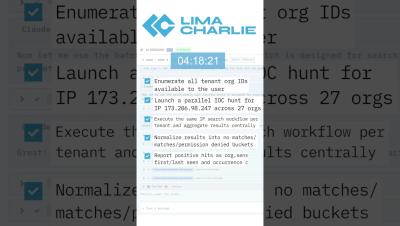
The 2025 MITRE ATT&CK Enterprise Evaluations featured sophisticated cross-domain attacks from Scattered Spider, and CrowdStrike's Charlotte AI proved essential in delivering 100% detection and protection with zero false positives. Charlotte AI accelerated every stage of security operations with Agentic Detection Triage for instant verdicts, Agentic Response that investigates alerts like expert analysts, and command-line analysis in plain language.

Stealc Infostealer: A Deep Dive into Its Evolution, Operations, and Threat Landscape

Stealc, an information-stealing malware operating as Malware-as-a-Service (MaaS), has emerged as a potent tool in the cybercriminal arsenal since its debut in early 2023. Advertised on Russian-speaking underground forums. Established stealers such as Vidar, Raccoon, Mars, and RedLine, offering customizable data exfiltration for browsers, cryptocurrency wallets, and applications. Its non-resident design minimizes footprints, enabling stealthy theft of credentials, cookies, autofill data, and files.

Living off the Land - 2025 MITRE ATT&CK Enterprise Evaluations

The 2025 MITRE ATT&CK Enterprise Evaluations tested detecting malicious living-off-the-land attacks while avoiding false positives on legitimate tools. CrowdStrike delivered 100% detection and protection with zero false positives. Adversaries like Mustang Panda weaponize legitimate tools like PowerShell, WinRAR, and curl.exe while these same tools run legitimately across enterprises daily. You can't block these tools without collapsing operations.

CISO Workshop on API Threat Modeling: How to Use STRIDE to Predict, Prevent, and Protect

Threat modeling is a critical function for effective cybersecurity and threat models must adapt to emerging threats. As API deployments grow across organizations, cybersecurity teams need to extend their threat modeling to include the API attack surface. In this webinar, we'll examine threat modeling best practices for APIs, focusing on the STRIDE methodology. Attendees will learn.

What You Need to Know about the Coupang Data Breach

Coupang, a company listed on the NYSE, is South Korea’s largest online retailer and is headquartered in Seattle. It serves millions of customers in over 190 countries, including the United States, offering retail, video streaming, restaurant delivery, and fintech services worldwide under various brands. With approximately $4 billion of U.S.

Why a People-Centric Security Strategy Improves Resilience

If Darth Vader and the rest of the Empire made one major strategic mistake, it was failing to understand the important role that the human element plays in security. Convinced of their superiority, the Empire’s leaders assumed that the Death Star was impenetrable. However, in the end, it was a scientist and his team who compromised the technology by building in a backdoor.

Why AI Privacy is a Competitive Advantage (Not Just Compliance)

In most startups building or using AI, privacy often gets treated like a checkbox that legal or security will “handle later.” That mindset quietly kills deals, scares off enterprise buyers, and limits your access to the very data your models need. Here is the truth that more founders and CTOs are embracing. Privacy makes your product easier to buy, models better to train, and business more valuable.

Kubernetes 1.35 Security Changes: cgroup, WebSockets, Image Pull Auth + More

It’s December, and Kubernetes 1.35 is almost here - with security changes that can break workloads or access paths if you upgrade unprepared. This video is a fast, practical security edition rundown for security and platform engineers: what changed, why it matters, and what to verify before you roll 1.35 into production. In this video (Kubernetes 1.35 security highlights): If you want a deeper dive, comment with what you’re running today (managed K8s vs self-managed, distro, container runtime, auth setup) and I’ll break down the safest upgrade path.