
SecureAge Technology
Get a Free Upgrade to 1-Year SecureAPlus Essential (worth $19.99) Use code: 62AB-1B4E-172A-C2AA Download at: bit.ly/InfoSecFreeSecureAPlus21 Follow the instructions below: bit.ly/InfoSecSecureAge21

Security-First: Why It's Right and What It Means
Most businesses today understand that cybersecurity should be a central part of their operations. Still, more often than not, professionals view security as an extra feature, something to add on after settling everything else. This has been the predominant approach for years, and it’s part of why so many companies find themselves vulnerable. Rising cybercrime has made the need for change increasingly evident, and many companies are responding.
Kickstart Guide to Implementing the NIST Cybersecurity Framework
Cybersecurity practitioners worldwide use the NIST Cybersecurity Framework to strengthen their security program and improve their risk management and compliance processes. The framework is voluntary, but it offers proven best practices that are applicable to nearly any organisation. However, it can seem daunting at first because it includes so many components.
Third-Party Risk Management Strategies
In this ebook, we will highlight three principles that are key to implementing a world-class TPRM program. Taken together, these practices will move your organization toward a full 360° view of organizational risk-both internally and across your ecosystem: see risk, solve problems, report results.
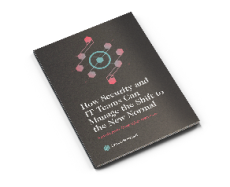
How Security & IT Teams Can Manage the Shift to the New Normal
The COVID-19 pandemic has disrupted businesses in ways that few had planned for, resulting in shutdowns, global economic downturn, supply chain volatility, and a sudden uptick in e-commerce and remote work. The disruption is straining security and IT teams who have to quickly respond and adapt to a series of unanticipated business events. How can security and IT teams stay agile, enable business resilience, and manage the shift to the new normal?
The Right Steps to SASE: Refactor Internal Data Center Controls to Closed Loop Risk Management
The following is an excerpt from Netskope’s recent book Designing a SASE Architecture for Dummies. This is the sixth in a series of seven posts detailing a set of incremental steps for implementing a well-functioning SASE architecture. Throughout this series, we repeat that the data center is just one more place people and data have to go—it’s no longer the center of attention.

How to reduce your attack surface with system hardening in 2021
The goal of system hardening (or security hardening) is to reduce the attack surface. It includes reducing security risks and removing potential attack vectors. By removing superfluous programs, accounts functions, applications, ports permissions access etc., the reduced attack surface means the underlying system will be less vulnerable, making it harder for attackers or malware to gain a foothold within your IT ecosystem.
Anticipate, Respond & Adapt: Organizational Resilience | Ep 20
Gary Hibberd, Professor of Communicating Cyber for Cyberfort and former head of business continuity and information security at various companies, teaches the importance of building resilience in your organization not just with technology, but with people and processes.