The Role of Artificial Intelligence in Cybersecurity

The integration of artificial intelligence (AI) into various domains has become ubiquitous. One area where AI’s influence is particularly pronounced is in cybersecurity. As the digital realm expands, so do the threats posed by cybercriminals, making it imperative to employ advanced technologies to safeguard sensitive information.

Securing the Weakest Link: A Guide to Third Party Cyber Resilience

We live in a business world where vast amounts of our critical services are delivered to us as a service. The world of on premise solutions has all but disappeared – sure, there are still some systems that operate on premise but these days, more key services are delivered to users and organisations as a service solution. This has increased profitability, allowed small companies to gain access to software and systems that previously were out of reach and has dealt a significant blow to piracy.

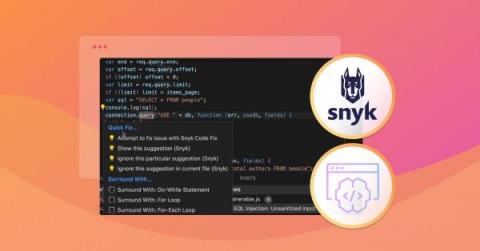
Snyk is your security companion for Amazon CodeWhisperer

Your developer teams plan to adopt a generative AI coding tool, but you — a security leader — have compliance and security concerns. Most important of which being, what if you can’t keep pace with your developers and something significant slips through the net? Luckily, you can stay secure while developing at the speed of AI with Snyk, the security companion for Amazon CodeWhisperer.

Top Ransomware Trends of 2023

In recent years, the landscape of cyber threats has witnessed a dramatic shift, with ransomware emerging as a formidable and ever-evolving menace. As organizations and individuals become increasingly dependent on digital infrastructure, cybercriminals are quick to adapt their tactics, making it crucial to stay abreast of the latest trends in ransomware.

Live API Attack Simulation

“We have an API gateway, and the strong authentication & authorization keeps us secure.” This notion could cost you a databreach, a compliance fine or even application downtime that may erode customer trust. In this webinar, Karthik Krishnamoorthy, CTO and Vivekanand Gopalan, VP of Products at Indusface demonstrate how APIs could be hacked.

Datadog announces commitment to achieving FedRAMP High and Impact Level 5 authorizations

As government agencies accelerate their adoption of cloud technologies—particularly SaaS applications—they need to adhere to strict compliance and security standards. The Federal Risk and Authorization Management Program (FedRAMP) sets these standards for civilian federal agencies, while the Impact Levels laid out by the Defense Information Systems Agency (DISA) in their Cloud Computing Security Requirements Guide set guidelines for Department of Defense (DoD) agencies.

Integrating ESG Into a TPRM Program: Mitigating Operational Risk

Environmental, social, and governance (ESG) is a framework that holistically assesses the sustainability of a business or investment. Investment groups, business continuity planners, enterprise risk management personnel, and third-party risk management (TPRM) programs utilize ESG to manage sustainability risks.

Zero Trust Architecture

Redefining Cybersecurity Perimeters Traditional security models that rely on a defined perimeter are proving to be inadequate in protecting sensitive data and systems. The increasing sophistication of cyber threats demands a more proactive and robust approach. Enter Zero Trust Architecture (ZTA), a paradigm shift in cybersecurity that challenges the conventional notion of trust within network boundaries.

Organize and analyze your Google Cloud security findings with Datadog

As your cloud infrastructure scales to handle the weight of new features and a growing user base, your attack surface increases as well. When combined with the steady rise in security threats—more than 25,000 vulnerabilities were identified in 2022 alone—identifying every risk to your distributed system can be a challenge.

What Is Email Spoofing and How Does It Work?

Email spoofing is a type of cyber threat where a cybercriminal sends emails to potential victims using fake sender addresses. Email spoofing works by forging a sender address to make it seem as though it’s coming from a legitimate person or company. Email spoofing is a tactic typically used by cybercriminals when carrying out phishing attacks to encourage their targeted victim to send them sensitive information.