Fortifying Networks Against Inbound Threats and Outbound Data Loss Should be an Organizational Priority

Interactive, hands-on keyboard attack campaigns are employed by today’s most proficient threat actors to penetrate organizational defenses. The network perimeter is typically the initial line of defense against unauthorized access to an organization’s network and the sensitive data it contains. After infiltration, attackers establish command-and-control (C&C) and data exfiltration channels to receive malicious payloads and export stolen data.

Infostealers: An Early Indicator of Ransomware Attacks

Cybersecurity experts are beginning to notice a recurring pattern: many companies that fall victim to ransomware attacks first experience infections from infostealers. These malicious tools are designed to siphon sensitive information from systems, but they might also serve as an early warning for defenders, providing the opportunity to act before a full-scale ransomware attack occurs.

Detect and Prevent Insider Threats with Lookout

Discover how to safeguard your organization from one of the most significant threats: malicious insiders. Learn to differentiate between legitimate user behavior and nefarious activities. By leveraging user and entity behavior analytics (UEBA), real-time alerts, adaptive security policies and dynamic decryption, the Lookout Cloud Security Platform ensures comprehensive protection against insider threats.

Automating Security Workflows with DAST Essentials

In today's digital landscape, developers face mounting pressure to deliver secure applications within tight deadlines. But with faster release cycles, it becomes challenging to prioritize security. Security testing needs to work and scale within your DevOps speed and release frequency. Web applications are highly targeted assets, accounting for 40% of breaches within organizations, according to the Verizon Data Breach Investigations Report.

Build Security Workflows in Seconds with AI Workflow Builder

In today’s fast-moving threat landscape, Hyperautomation is essential. But building workflows from scratch? That’s time you don’t have. That’s why we started with a library of pre-built templates, helping teams quickly configure security automation workflows. Templates made automation more accessible. Now, we’re taking the next step in that evolution and introducing Torq’s AI Workflow Builder. By harnessing the power of AI, we’re going beyond templates.

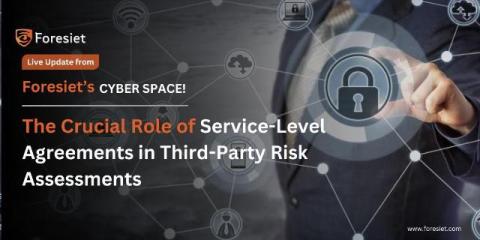
The Crucial Role of Service-Level Agreements in Third-Party Risk Assessments

In today's interconnected business environment, third-party risk management has become a pivotal concern for organizations. As businesses increasingly rely on external vendors for essential services, managing the risks associated with these third-party relationships is critical. A key tool in mitigating these risks is the Service-Level Agreement (SLA).

The importance of continuous attack surface management in cyber security

In today’s interconnected world, cyber threats continue to evolve at a rapid pace. As businesses grow more reliant on digital systems and services, the cyber security attack surface—the totality of an organisation’s digital exposure—has expanded, increasing the risks faced by security teams. The complex nature of these threats calls for a more adaptive and responsive approach to security, particularly in identifying and mitigating vulnerabilities before they can be exploited.