Financial Services Industry Experiences a Massive Increase in Brand Abuse

Industry analysis of the domains used behind phishing and brand impersonation attacks show financial institutions are being leveraged at an alarming rate. It’s one thing to see your industry at the top of some “state of” cybersecurity report, but it’s entirely different to learn that 68% of all phishing web pages identified in a single quarter are from your industry. That’s exactly what we find in Akamai’s latest analysis of websites across the Internet.
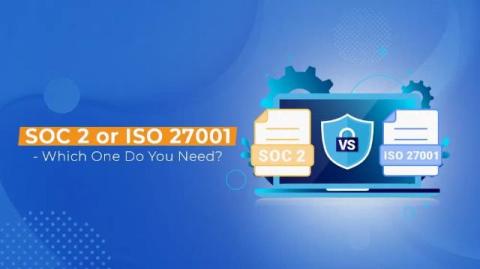
SOC 2 or ISO 27001 - Which One Do You Need?

In the wide world of information security, there are many different frameworks, standards, and systems in use to help assume a secure stance against threats. Two commonly seen frameworks are SOC 2 and ISO 27001. How do these two stand in comparison to each other, and which one do you need for your business? Let’s discuss.

PII Data Classification: Key Best Practices

PII (Personally Identifiable Information) refers to data that can directly or indirectly identify an individual, such as names, addresses, or phone numbers. Protecting PII data is critical, as exposure can result in identity theft, financial fraud, or privacy breaches. With businesses collecting vast amounts of PII, proper PII data classification has become essential to safeguarding sensitive information and complying with data protection regulations.

Battling Imposter Syndrome in Cybersecurity: A Personal Journey | Razorthorn Security

Lisa Ventura shares her personal struggle with imposter syndrome and how it almost held her back from launching a cybersecurity association. Learn about her journey in overcoming self-doubt and raising awareness through an annual imposter syndrome day.

Vulnerability Assessment VS Penetration Testing: What's the difference?

In cybersecurity, vulnerability assessment and penetration testing are often discussed together, but they serve distinct purposes in securing a network. Organizations looking to strengthen their cybersecurity defenses must understand the differences between the two, as well as when and how to use each. This blog explores the difference between vulnerability assessment and penetration testing, and why a combined approach can be essential in achieving the most robust security strategy.

Transforming the Future of Healthcare Privacy & Research with Patient Data Tokenization

Healthcare frontline workers and medical service providers access, process, and transmit sensitive medical data also known as PHI (protected health information), to conduct their daily activities. Facilitating seamless flow of PHI is critical to ensure patients get high quality services. Despite being tightly regulated, the healthcare industry has consistently topped the list of most targeted for breaches.

Not All Synthetic Data is the Same: A Framework for Generating Realistic Data

A common misconception about synthetic data is that it’s all created equally. In reality, generating synthetic data for complex, nuanced use cases — like healthcare prescription data — can be exponentially more challenging than building a dataset for weather simulations. The goal of synthetic data isn’t just to simulate but to closely approximate real-world scenarios.

Cyber Essentials vs. Cyber Essentials Plus: Key differences

If you wish to fortify your organization’s cybersecurity posture, obtaining a Cyber Essentials certification is a good idea. It enables IT managers to be more aware of the cybersecurity risks in their environment and take actionable steps to mitigate them. Before you pursue it, though, you should decide between two certification levels: Cyber Essentials and Cyber Essentials Plus. ‍ While both are cybersecurity assurance schemes, Cyber Essentials Plus offers a greater level of assurance.

How to get your Cyber Essentials certification: A process guide

Most organizations today are heavily reliant on technology, regardless of the product or service they provide. This expands their data exposure points and potential attack surface, which is why there is a significant need to monitor the risks and vulnerabilities in the cybersecurity landscape. ‍ Cyber Essentials certification is a comprehensive cybersecurity strategy involving vigilance over various scattered technologies, policies, and controls.