How UEBA Enhances Threat Detection Across the Network Layer

11 days. That’s the global median dwell time for attackers in 2024,down from 26 days when external entities notify, but still long enough to cause significant damage. Your firewalls? They’re stopping known signatures. Endpoint tools see individual machines. But the network layer, where attackers actually move around, escalate privileges, steal sensitive data, that’s often a blind spot.

Defending Against WAF, API, and DDoS Attacks

Defending Against WAF, API, and DDoS Attacks In this SourceForge video, Carlo Alpuerto of A10 Networks shares insights on how ThreatX protects WAF, API, DDoS, and bot attacks, processing all the information within a single database. Alpuerto highlights the platform's ability to apply these protections and actionability, showcasing how users can create and manage specific rules. He also notes that the ThreatX security operations center (SOC) team curates these rules daily, utilizing threat intelligence, CVE notifications, and zero-day news to provide comprehensive, up-to-date protection.

How Outsourcing and Automation Can Help Australian and New Zealand Organizations Plug the Cybersecurity Skills Gap

Organizations across Australia and New Zealand are increasingly confronted with the challenge of bridging the cybersecurity talent shortage with 69 per cent of ICT professional occupations in shortage, a gap that compounds concern as the complexity of cyberthreats continues to evolve. Faced with a finite talent pool, businesses must find innovative ways to maintain their security posture without sacrificing operational efficiency or increasing strain on their resources.

Abusing supply chains: How poisoned models, data, and third-party libraries compromise AI systems

The AI ecosystem is rapidly changing, and with this growth comes unique challenges in securing the infrastructure and services that support it. In Part 1 of this series, we explored how attackers target the underlying resources that host and run AI applications, such as cloud infrastructure and storage. In this post, we'll look at threats that affect AI-specific resources in supply chains, which are the software and data artifacts that determine how an AI service operates.

Why CTI Must Recommend, Not Just Report

In traditional intel roles, analysts avoid making direct recommendations. But Scott Scher explains why that doesn’t work in the business world. CTI teams can’t just present options, they need to say what should happen next. Scott breaks down why effective CTI must go beyond context and offer clear, actionable guidance for defenders. Hidden Truths: Traditional intel avoids giving direct recommendations Business leaders and defenders want clear next steps CTI teams must say.

Abusing AI interfaces: How prompt-level attacks exploit LLM applications

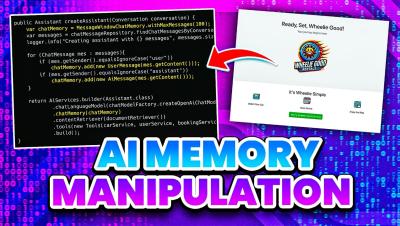
In Parts 1 and 2 of this series, we looked at how attackers get access to and take advantage of the infrastructure and supply chains that shape generative AI applications. In this post, we'll discuss AI interfaces, which we define as the entry points and logic that determine how a user interacts with an AI application. These elements can include chat interfaces, such as AI assistants, and API endpoints for supporting services.