Security | Threat Detection | Cyberattacks | DevSecOps | Compliance

Password Policy: A History of Getting It Wrong and how to do it right in 2025 | October Cyber Bytes

In this session, Sedara’s David Frier explores the fascinating history of password policies—how the industry went wrong in the early 2000s, and what we’re finally getting right in 2025. From outdated complexity rules to modern authentication standards, this webinar breaks down decades of password practices and reveals how organizations can strengthen security while making life easier for users.

How AI Cuts SIEM Migration Time from Months to Minutes

SIEM migration is tedious, time-consuming, and pulls security professionals away from actual security work. Manually exporting thousands of detection rules, translating query logic, and fixing errors can take weeks or months. In this episode of AI can do what now?!, Haran Kumar (principal security solutions architect at Elastic) walks through how AI actually helps automate SIEM migration.

Intel Chat: Kansas City National Security Campus breach, COLDRIVER, KEV catalog & AWS outage [260]

In this episode of The Cybersecurity Defenders Podcast, we discuss some intel being shared in the LimaCharlie community. Newer article link. Support our show by sharing your favorite episodes with a friend, subscribe, give us a rating or leave a comment on your podcast platform. This podcast is brought to you by LimaCharlie, maker of the SecOps Cloud Platform, infrastructure for SecOps where everything is built API first. Scale with confidence as your business grows.

LDAP Nightmare - Windows LDAP Denial of Service Vulnerability

In this technical webinar, SafeBreach security experts explore recent LDAP vulnerabilities, focusing on CVE-2024-49113 — a critical flaw capable of crashing unpatched Windows Servers. The team breaks down: This session emphasizes the importance of proactive patching, continuous validation, and understanding the underlying mechanics of directory services to strengthen enterprise resilience.

Building Digital Operational Resilience in the DORA Era

In this session, our team breaks down the Digital Operational Resilience Act (DORA) — the EU regulation reshaping cybersecurity expectations across the financial sector. DORA mandates continuous testing and validation of critical live production systems, emphasizing adversary emulation and real-world attack simulations to ensure true operational resilience. Learn how organizations are adapting their programs, what the rise of the Chief Resilience Officer means for cybersecurity leadership, and how continuous validation supports both compliance and readiness.

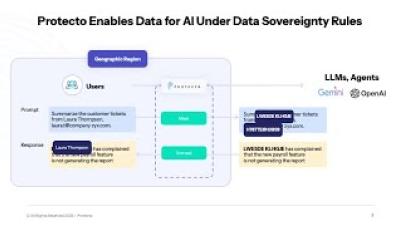
How a Leading Bank Unlocked AI - Without Breaking Data-Sovereignty Laws

In many countries — especially in India and across the Middle East — strict data-sovereignty laws prevent banks and enterprises from using cloud-based AI models like Gemini, GPT, or Anthropic. Sending personal or financial data outside national borders can violate compliance rules, blocking the adoption of AI. This video shows how Protecto helped a leading bank overcome these challenges. By deploying Protecto’s context-aware protection layer inside the bank’s private cloud, the bank could safely use advanced AI models while staying fully compliant.

Decrypting Microsoft Defender for Endpoint Licensing with Ken Westin

Defender Fridays - Decrypting Microsoft Defender for Endpoint Licensing with Ken Westin Join us for this week's Defender Fridays as we explore the complex world of Microsoft Defender for Endpoint licensing with Ken Westin, Senior Solutions Engineer at LimaCharlie. At Defender Fridays, we delve into the dynamic world of information security, exploring its defensive side with seasoned professionals from across the industry. Our aim is simple yet ambitious: to foster a collaborative space where ideas flow freely, experiences are shared, and knowledge expands.

Agentic AI Ransomware: What You Need to Know

Brace yourself for agentic AI ransomware. It's a terrifying fusion of cutting-edge tech and malicious intent that's set to redefine cyber threats as we know them. Unlike traditional ransomware, which follows pre-programmed rules, agentic AI ransomware can adapt its behavior in real-time based on its environment and the defenses it encounters.