3 Bulletproof Ways to Avoid Being a Phishing Victim
While hackers are getting smarter and more complex, it’s vitally important to set the groundwork to avoid being a phishing victim. Here are three bulletproof ways to avoid being a phishing victim.


While hackers are getting smarter and more complex, it’s vitally important to set the groundwork to avoid being a phishing victim. Here are three bulletproof ways to avoid being a phishing victim.
In March this year, organizations employing Microsoft Exchange were in for a shock when Microsoft announced that a hacker group was gaining access to organizations’ email accounts through vulnerabilities in its Exchange Server email software. The group tried to gain information from defense contractors, schools, and other establishments in the U.S.
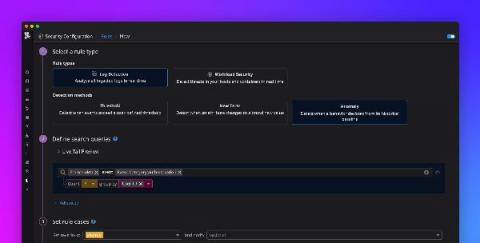
Securing your environment requires being able to quickly detect abnormal activity that could represent a threat. But today’s modern cloud infrastructure is large, complex, and can generate vast volumes of logs. This makes it difficult to determine what activity is normal and harder to identify anomalous behavior. Now, in addition to threshold and new term –based Threat Detection Rules , Datadog Security Monitoring provides the ability to create anomaly
A Service Organization Controls (SOC) report provides independent validation over a company’s internal financial reporting controls. They were originally used to validate compliance with the Sarbanes-Oxley Act of 2002. When the SEC released the “ Commission Statement and Guidance on Public Company Cybersecurity Disclosures ,” SOC reports started to include cybersecurity. Understanding what a SOC Type 2 report is can give insight into why it is important to your organization.
Advancing telecommunications positively affects the maritime industry. The industry is more organized and well-connected; however, the rising technology brings new challenges and vulnerabilities. Although flags and semaphores are still applicable in some cases, most communications are radio-based. Vessel traffic service (VTS) tracks maritime traffic similar to what the air traffic controller does for aircraft; the VTS receives vessel information via the AIS system .
STOCKHOLM — Aug. 18, 2021 — Detectify , the SaaS security company powered by ethical hackers, today announced its partnership with Hackers for Change. The collaboration will equip non-profit organizations with the tools required to strengthen security and decrease the likelihood of cyber-attacks, supporting the mission of Hackers for Change to provide charities and nonprofits with industry-quality cybersecurity services at no cost.
Recently, Snyk added Social Trends to its vulnerability data . This new indicator shows you what vulnerabilities are trending so you can better prioritize remediation. Our research team found out that there is a strong correlation between socially trending vulnerabilities and the existence of exploits that can actually harm your application.
AWS GDPR compliance, privacy and personal data protection are one of the most common concerns among cloud teams that run workloads in the AWS Cloud. When thinking about the different mechanisms to protect privacy and gain trust from the users who utilize our services, Compliance is one of the words that comes to mind.