Security | Threat Detection | Cyberattacks | DevSecOps | Compliance

The Importance of AI Penetration Testing

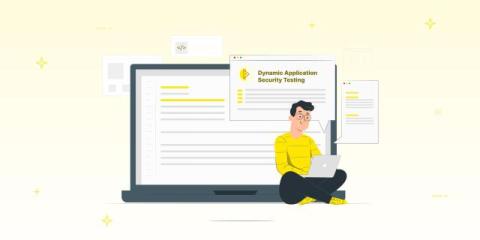
Penetration Testing, often known as "pen testing," plays a pivotal role in assessing the security posture of any digital environment. It's a simulated cyber attack where security teams utilise a series of attack techniques to identify and exploit vulnerabilities within systems, applications, and an organisation’s infrastructure. This form of testing is crucial because it evaluates the effectiveness of the organisation's defensive mechanisms against unauthorized access and malicious actors.

Breaking down BEC: Why Business Email Compromise is More Popular Than Ever

Cybersecurity moves fast, and the latest threats to reach organizations worldwide are being built on the back of artificial intelligence (AI) models that spit out accurate code, realistic messages, and lifelike audio and video designed to fool people. But as headline-grabbing as AI-based attacks appear to be, they aren’t driving the most breaches globally. That would be BEC attacks, in which attackers leverage stolen access to a business email account to create a scam that results in financial gain.

CVE-2024-5805 & CVE-2024-5806: Authentication Bypass Vulnerabilities in Progress MOVEit Transfer and MOVEit Gateway

On June 25, 2024, Progress disclosed two vulnerabilities affecting MOVEit Transfer and MOVEit Gateway: CVE-2024-5805: A critical severity authentication bypass vulnerability affecting MOVEit Gateway (SFTP module). MOVEit Gateway is a proxy for MOVEit Transfer, designed to securely handle inbound connections when deployed behind a firewall.

Defending Gold: Protecting the 2024 Olympics from Cyber Threats

As the 2024 Olympic Games in Paris approach, organizers are intensifying cybersecurity measures in response to warnings from experts and law enforcement agencies about a likely surge in cyberattacks. The Games, set to start on 26 July this year, are projected to sell over 13 million tickets and attract more than 15 million visitors to Paris, generating around 11 billion euros in economic activity.

The 5 Industries Most Vulnerable to Data Breaches in 2024

As we pass the halfway mark of 2024, data breaches remain on the rise. Cybercriminals are finding more and more inventive ways to infiltrate organizations, exploiting vulnerabilities in networks, software, and human behavior. From phishing schemes and ransomware attacks to insider threats and supply chain compromises, the threat of cyber attacks continues. This is bad news, especially for certain industries. The consequences of these breaches extend far beyond financial losses.

From application to Zero Trust: Identity Security fundamentals to stay ahead of the threat landscape

Cybercriminals are not new, and often neither are their tactics. Despite this, phishing attacks, which incorporate social engineering in emails and messages to persuade people to perform an action that puts organisations at risk, continue to be highly successful. New technologies, such as GenAI, are improving these tactics further and companies must implement a strategic approach built on a solid foundation of identity security to minimize risks.

Securing Your Wealth: How Cybersecurity Affects Investment Decisions

The frequency and sophistication of cyber threats make cybersecurity a critical factor in any company. Therefore, investors should be more vigilant, recognizing that a company’s cybersecurity posture can significantly impact its financial health and stability. This article highlights the need for robust cybersecurity strategies and how these can determine investment decisions.

RAG in Production: Deployment Strategies and Practical Considerations

The RAG architecture, a novel approach in language models, combines the power of retrieval from external knowledge sources with traditional language generation capabilities. This innovative method overcomes a fundamental limitation of conventional language models, which are typically trained on a fixed corpus of text and struggle to incorporate up-to-date or specialized knowledge not present in their training data.

What Drives an SME's Approach to Implementing AI?

AI’s rise in both the business and consumer worlds has been astonishingly exponential. Businesses are using AI to generate content, analyze data, automate processes, and more. But small and medium-sized enterprises (SMEs) look and act very differently from their enterprise counterparts. This prompts the question: How are SMEs approaching AI? Recent data from a 2024 JumpCloud study of SME IT may help answer it.