Please see part Part I for our introduction to leveraging AI in the enterprise and Part II for why the legacy landscape falls short in the age of GenAI.
As cyber threats evolve in scale and sophistication, governments and regulatory bodies are tightening cybersecurity and data protection regulations. Compliance is not only about avoiding fines but also about building trust, enhancing operational resilience, and safeguarding long-term business success. Data breaches and cyberattacks can disrupt operations and as such, organisations should prioritise compliance to mitigate financial and legal risks whilst fostering customer confidence.
With the announcement of Anthropic’s Claude 3.7 Sonnet model, we, as developers and cybersecurity practitioners, find ourselves wondering – is the new model any better at generating secure code? We commission the model to generate a classic CRUD application with the following prompt: The model generates several files of code in one artifact, which the user can manually copy and organize according to the file tree suggested by Claude alongside the main artifact.
As businesses rely more on technology, the need to identify and remediate vulnerabilities becomes ever more pressing to avoid devastating breaches. Automated penetration testing offers a revolutionary approach to vulnerability detection, utilising cutting-edge tools to mimic hacker behaviour and uncover weaknesses in systems. This method not only enhances the efficiency of assessments but also significantly reduces the time and resources required compared to traditional penetration testing.
As the adage goes, time is money, and nowhere does this ring more true than in an evolving threat landscape. The faster companies detect, respond, and recover from data breaches, the better for their pockets. Using AI and security automation to shorten the breach lifecycle has been shown to save $2.2 million more on average compared to not employing these technologies.
The latest version of the CIS Controls was released in June 2024. The new version, 8.1, introduces some minor updates via design principles. With these changes in design principles, CIS Controls v8.1 has made updates to the following: The most notable improvement for the CIS Controls v8.1 is the addition of “Governance” as a security function. CIS states, “Effective governance provides the structure needed to steer a cybersecurity program toward achieving their enterprise goals.”
Are you still running your package pipeline on default settings and grabbing libraries straight from public repos? Big yikes. That’s rolling out the red carpet for dependency confusion attacks to drop shady code into your project. It isn’t uncommon. Nearly half (49%) of organizations are exposed to the risks of a dependency confusion attack because they make the same mistakes. But what exactly is dependency confusion, and how do these attacks manage to infiltrate?
At Netacea we talk about protecting our customers from sophisticated attacks carried out by bots. But what does this actually mean? How do you know you’ve got a problem with sophisticated bot attacks? We go into a detailed explanation below but it’s worth remembering that there is a human adversary behind all automated attacks. Although somewhat autonomous once programmed, bots do not attack a target without human intervention.
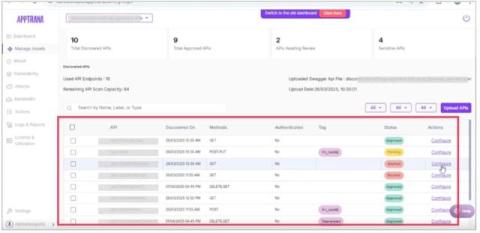
API adoption has become a critical driver of digital transformation, fueling cloud migration, seamless integrations, and the monetization of data and functionality. This rapid expansion, however, has inadvertently created increasingly complex ecosystems that often outpace the security measures designed to protect them.
Trends observed by Kroll in Q4 confirm that 2024 was a year of fragmentation and fast-moving evolution for cyber threats, and they suggest that 2025 is likely to be similar. A key trend was the ongoing development of phishing techniques and approaches, as phishing’s continuation as a dominant method for initial access in 2024 illustrated. Aligning with trends from last year and previous years, professional services stands out as 2024’s most targeted sector.