Security | Threat Detection | Cyberattacks | DevSecOps | Compliance

How to Prevent Ransomware on Networks: Proven Strategies for Protection

Organizations around the world are increasingly vulnerable to ransomware attacks, which have caused over $57 billion in damages globally by 2025, according to a report by Cybersecurity Ventures. These cyberattacks can shut down entire networks, disrupt services, and inflict severe financial and reputational damage. Knowing how to prevent ransomware on networks is essential to staying protected against these threats.

Smart Routing in Payment Systems: How It Boosts Acceptance Rate

Every declined transaction is lost revenue. Industry data consistently shows that online merchants lose a meaningful share of potential transactions to technical processor declines, incorrect routing, or individual acquirer limits - losses entirely unrelated to customer intent or card validity. Smart routing is the architectural solution that addresses this systematically. A declined transaction is not a customer saying no. It is your payment infrastructure saying it cannot handle the request - a fixable engineering problem.

Is IQ Option Safe in 2026? A Closer Look for Nigerian Traders

The surge in retail trading across Nigeria has pushed more users toward global platforms, especially as the naira remains volatile. With that growth comes a familiar concern: whether widely advertised brokers like IQ Option are reliable or potentially risky. According to Tribune Online, IQ Option has been active since 2013 and serves tens of millions of users worldwide. This long operational history places it outside the category of short-term schemes, but understanding its mechanics and limitations is still critical before engaging with the platform.

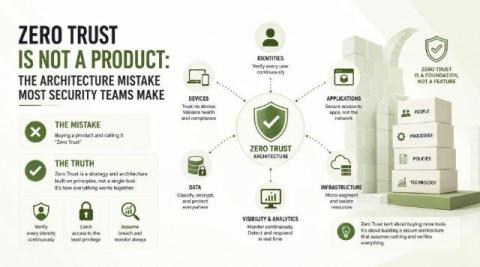
Zero trust is not a product: The architecture mistake most security teams make

Zero trust is not something you buy off a shelf. It is an architectural and cultural shift in how your organization thinks about access, risk, and trust across every layer of your environment. Most zero trust approaches are anchored on three core principles: verify explicitly, use least privilege access, and assume a breach. Verifying explicitly means using strong, context-aware authentication (like MFA, device posture checks, and risk signals) for every connection.

Hybrid visibility done right: Visualize, monitor, and correlate your VPCs, Subnets, EC2, ECS, and RDS services with AWS Cloud Observability in DDI Central

Every enterprise today runs on two kinds of infrastructure. One half lives on-premises: the company’s data centers, internal networks, DNS zones, DHCP scopes, IP address spaces, and the systems that help every device find and connect to the right service. The other half lives in the public cloud: where applications, databases, containers, and storage run on infrastructure delivered by providers like Amazon Web Services (AWS). This hybrid model is no longer a temporary phase.

From Cyberwar to Cognitive Warfare: The Geopolitical Impact on Cybersecurity in Africa

We’ve long defined cybersecurity as the technical discipline of protecting networks, data and systems. But when viewed through a geopolitical lens, then this definition is no longer sufficient. What we are dealing with today goes beyond protecting organisational data, to protecting economies, sovereignty, and increasingly, human perception.

You Have 60 Seconds to Stop the Breach. Are You Ready?

2026 has officially become the year of speed, scale and support The delta between a phishing email landing and a full organizational compromise has shrunk to mere seconds. The reality by the numbers: To close this window, your defense strategy must evolve into a two-step powerhouse of accuracy and automation.

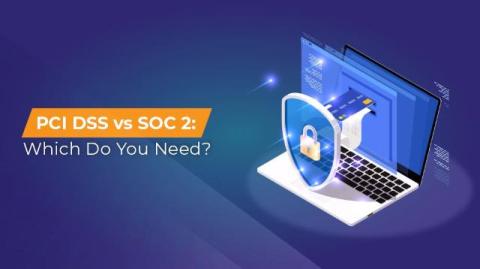
PCI DSS vs SOC 2: Which Do You Need?

With so many different security frameworks and standards that apply to different industries and businesses, it can be difficult to even know where to begin. Which ones do you need to use, at what levels, and when? Two frameworks in particular are closely related and important for many businesses, and thus are the cause of a lot of confusion. We wanted to address that confusion today. Those two are PCI DSS and SOC 2.

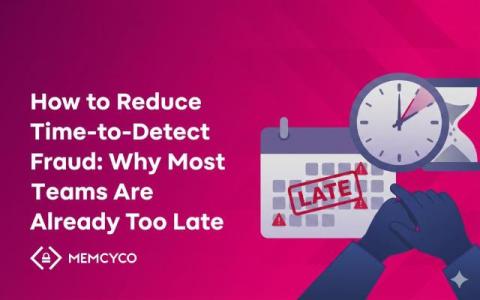
How to Reduce Time-to-Detect Fraud: Why Most Teams Are Already Too Late

ATO fraud cost US adults $15.6 billion in 2024, yet most fraud teams are still measuring detection time from the moment an alert fires, not from the moment an attacker starts building infrastructure. That gap is where the damage happens. To reduce time to detect fraud, teams need to move detection upstream, to Stage 1 and Stage 2 of the fraud lifecycle, before phishing sites go live and before a single credential is submitted. Faster transaction monitoring won’t close this gap.

Cyberhaven Analyst Plugin: AI-Assisted Security Investigation in Claude Code and Codex

Security teams have a data problem. Not a shortage of data, but instead there is a growing data surfacing problem. The signals are there, the incidents are logged, and the classifications exist. But, getting from raw data to a prioritized action plan still requires close to an hour of manual querying, tab-switching, and context reconstruction, every single time. The Cyberhaven Analyst Plugin changes that.