Security | Threat Detection | Cyberattacks | DevSecOps | Compliance

SecurityScorecard and Intel: Digging Past the Surface for Enhanced Protection

Threat actors have responded to better protections in the operating system and improved endpoint detection and response (EDR) capabilities by moving down the stack to find entry points with full visibility and privileges into the stack above.

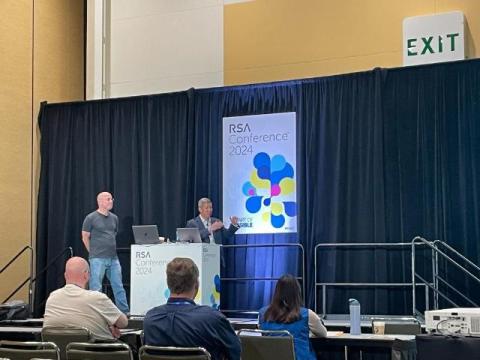
RSA 2024: The Art of Possible

“The best part of RSA is all the amazing people in the community trying to make the world a safer place. It’s also very exciting to see all the innovation to make adversaries’ lives harder – competition and collaboration make us better.” – CEO & Co-Founder Dr. Aleksandr Yampolskiy The SecurityScorecard team has just returned from an incredible week in San Francisco at RSA Conference 2024!

Why Companies Don't Archive (Common Challenges and Pitfalls in TMF Archival)

Failure to archive a completed Trial Master File (TMF) is, to put it simply, non-compliant. Despite this fact, pharmaceutical and biotech companies are often known to drag their feet on this process. Why would such organizations expose themselves to that risk? Unfortunately, there are several common hurdles that teams face when it comes to TMF archival. In this post, we’ll walk through what those hurdles are and how to overcome them.

Network Security Configure Encryption Types Allowed for Kerberos

The ability to authenticate securely over an unsecure network is paramount in safeguarding sensitive information and maintaining trust in digital interactions. In an era where communication often occurs over public networks like the internet, ensuring the authenticity of users and data is critical to prevent unauthorized access and data breaches. Kerberos is a Windows security network authentication protocol that allows users and services to securely authenticate over a non-secure network.

What is Cross-Site Scripting (XSS)? Types of XSS, Examples, and Patching Best Practices

Cross-Site Scripting (XSS) is a security vulnerability that allows an attacker to inject malicious code into a web page viewed by other users, usually in a script. When other users view the compromised page, the injected code can execute and steal sensitive information or perform malicious actions on their behalf. This attack typically targets web applications that allow user-generated content or input, such as message boards, comment sections, or search boxes.

Network Hardening Guide for IT Professionals

Network hardening involves implementing measures such as configuring firewalls, securing remote access points, blocking unused network ports, removing unnecessary protocols, implementing access lists, and encrypting network traffic to mitigate unauthorized access and bolster the security of a network’s infrastructure. This process involves identifying and addressing vulnerabilities in device management and configurations to prevent exploitation by malicious actors aiming to infiltrate the network.

Xalient achieves Top 10 in The Sunday Times Best Places to Work Awards

Xalient voted as one of the top 10 best loved companies in the big organisations category. Xalient employees rate job satisfaction, happiness, wellbeing, empowerment and information sharing all 'excellent'. Xalient recognised in the Spotlight Award for the Best Places to Work for Women.

A Career in Cyber Security: Navigating the Path to a Digital Safekeeping Profession

Cyber security represents not just a robust field teeming with opportunities but also an increasingly pivotal aspect of global digital infrastructure. With the prevalence of digital threats, your expertise in this domain can lead to a rewarding and socially significant cyber security career. Employers across various sectors seek professionals who can protect their data and systems, offering a broad market for your skills.

Top 10 Best-Known Cybersecurity Incidents and What to Learn from Them

Negligent or malicious behavior by those who have legitimate access to your systems can be more devastating to your company than the efforts of outside attackers. The 2023 Cost of Insider Risk Global Report by the Ponemon Institute shows that cybersecurity incidents caused by insiders through negligence, credential theft, and malicious intent had an average cost per incident of $505,113, $679,621, and $701,500, respectively.