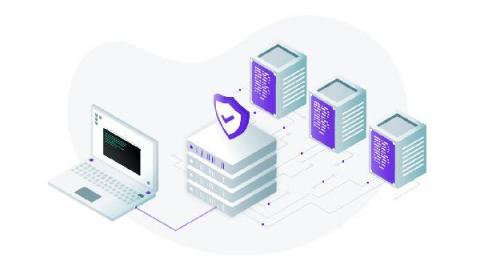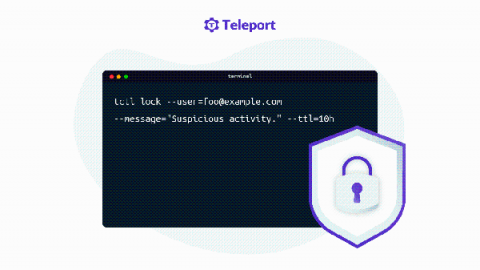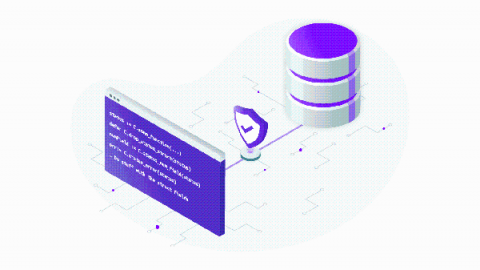
Teleport 6.0 Brings Identity-Aware Access to Databases Behind NAT
If you have PostgreSQL or MySQL databases running behind NAT in multiple environments, this release of Teleport is worth downloading and playing with.
Cross-Site Request Forgery (CSRF) attacks allow an attacker to forge and submit requests as a logged-in user to a web application. CSRF exploits the fact that HTML elements send ambient credentials (like cookies) with requests, even cross-origin. Like XSS, to launch a CSRF attack the attacker has to convince the victim to either click on or navigate to a link.
Amazon’s AWS Systems Manager, better known as SSM to long-time AWS users, was announced at the end of 2017, replacing the similarly named EC2 Systems Manager that had launched a year prior. Similar to other AWS products, System Manager provides a broad spectrum of features instead of a focused and opinionated product.
Every cloud has its own identity and access management system. AWS and Google use a bunch of JSON files specifying various rules. Open source projects like Kubernetes support three concurrent access control models - attribute-based, role-based and a webhook access control, all expressed using YAML. Some teams are going as far as inventing their own programming language to solve this evergreen problem.
Cross-site scripting (XSS) is an attack that allows JavaScript from one site to run on another. XSS is interesting not due to the technical difficulty of the attack but rather because it exploits some of the core security mechanisms of web browsers and because of its sheer pervasiveness. Understanding XSS and its mitigations provides substantial insight into how the web works and how sites are safely (and unsafely) isolated from each other.
SSH certificates, when deployed properly, improve security. A half-baked access system using certs is more vulnerable than a public-key-based one if a user or host gets hacked.
It seems like nowadays, every company is a SaaS company. We’ve even begun stratifying by what is sold, replacing the “software” in SaaS to whatever the product’s core competency is, search-as-a-service, chat-as-a-service, video-as-a-service. So, when we, at Teleport, set sail for the cloud after years of successfully navigating on-prem software, we came in with a different set of experiences.
What is a microservice? Should you be using microservices? How are microservices related to containers and Kubernetes? If these things keep coming up in your day-to-day and you need an overview in 10 minutes, this blog post is for you. Fundamentally, a microservice is just a computer program which runs on a server or a virtual computing instance and responds to network requests.
To the average person, weather forecasts inform whether or not they need to bring an umbrella to the office. But to some, it can be quite literally a matter of life and death. Organizations like the European Center for Medium Range Weather Forecasting (ECMWF) sit at the center of a web of highly sensitive operations, providing them weather predictions and reports.
This summer, Ada Logics integrated continuous fuzzing into Teleport to strengthen the security posture of the project. We’d like to thank Adam Korczynski from Ada Logics for initiating contact and doing the work. In this blog post, we will give a brief introduction to fuzzing and explain how to carry on the work moving forward. The motive for this work was to take the first steps in implementing fuzzing into Teleport’s development pipeline.