Security | Threat Detection | Cyberattacks | DevSecOps | Compliance

Better Ruby Gemfile security: A step-by-step guide using Snyk

Ruby is a well-defined and thought-out language and has been around since the mid-1990s. In 2004, Ruby incorporated RubyGems as its package manager. RubyGems is used to manage libraries and dependencies in a self-contained format known as a gem. The interface for RubyGems is a command line tool that integrates with the Ruby runtime and allows Gemfiles to be added or updated in a project. I looked at three Ruby platforms and found vulnerabilities that were surprising, even to me.
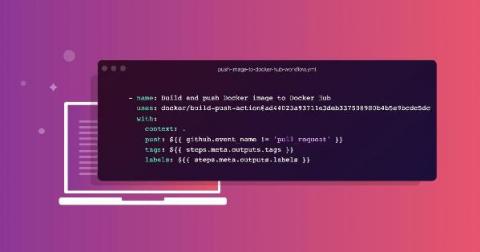

How to publish Node.js Docker images to Docker Hub registry using GitHub Actions

In a previous post, we presented a step-by-step tutorial on how to publish Node.js Docker images to GitHub Packages registry using GitHub Actions. In this post, we’ll focus on publishing the Docker image that we build to the public Docker Hub registry. Why is this useful you might ask? The Docker command line application docker has a default registry setting for docker.io which points to the Docker Hub registry.

Getting started with Snyk for secure Python development

If you’re a Python developer looking to easily secure your applications, you’re in the right place! Snyk helps you secure all the code making up your Python app — your own code, the open source libraries you’re pulling in, your containers, and your infrastructure as code (IaC) — by integrating seamlessly into your existing development workflows.

The best security advice from 100 episodes of The Secure Developer podcast

Technology, culture, and process all have to change to ensure safe software is delivered faster. It’s a lot to tackle. But you don’t have to do it alone. The Secure Developer, a podcast from Snyk’s founder Guy Podjarny, just hit 100 episodes of thought-provoking conversations with security experts at a wide cross-section of companies.

Snyk Code adds security scanning for C# and .NET

As a quick note, I have a personal history with .NET, including time working at Microsoft as a .NET evangelist. And I’ve briefly met Anders Jejlsberg, the designer of C# and Typescript, so this blog is a bit personal for me. We are happy to announce that Snyk Code scans for security vulnerabilities and provides remediation suggestions for yet another language: C#. This adds a major language to our portfolio which includes support for Java, JavaScript, TypeScript, and Python.

Announcing Social Trends: Use social media for security intelligence

We are excited to announce the availability of Social Trends, adding social media intelligence (SOCMINT) to Snyk’s vulnerability data to help development and security teams prioritize vulnerabilities more effectively. Given the size of vulnerability backlogs facing organizations today, finding and fixing security vulnerabilities in a timely manner is a monumental task. There simply are not enough hands on deck to triage and tackle all the vulnerabilities on the list.

Four steps for hardening Amazon EKS security

In the first part of this blog series, we explored deploying Amazon EKS with Terraform, and looked at how to secure the initial RBAC implementation along with securing the Instance Metadata Service. In this second post, we’ll look at more best practices to harden Amazon EKS security, including the importance of dedicated continuous delivery IAM roles, multi-account architecture for Amazon EKS cluster isolation, and how to encrypt your secrets in the control plane.

How Snyk is normalizing authentication strategies with Gloo Edge

Snyk supports multiple authentication (authN) strategies on its APIs. Historically, API keys have been the primary form of authN, but more recently we introduced support for authN using signed JWTs produced as a result of an OAuth integration. This is currently in use by both our AWS CodePipeline and Bitbucket integrations. In the beginning, Snyk began with a hub and spoke architecture with a central monolith making authN decisions.