Security | Threat Detection | Cyberattacks | DevSecOps | Compliance

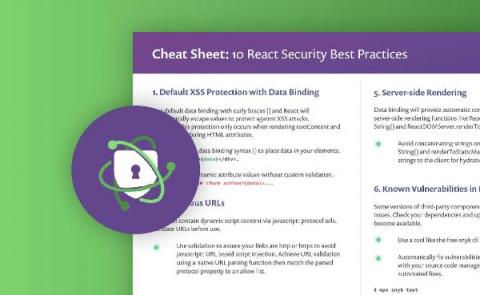
10 React security best practices

The date on this post reflects its latest update. This post was originally published on October 28, 2020. Looking for the best ways to secure your React app? Then you’ve come to the right place! We’ve created this checklist of React security best practices to help you and your team find and fix security issues in your React applications. We’ll also show you how to automatically test your React code for security-related issues and automatically fix them. Let’s get to it!


Improving developer experience with security tools at Pinterest

Using open source libraries securely is an ongoing priority at large organizations. One big challenge is integrating security tools into the developer workflow — and setting up a system that prioritizes vulnerability fixes — without overwhelming developers. But what does a successful approach look like?

The security course missing from higher education

Have you ever looked at the curriculum offered in a Computer Science program? Across many different universities, there are some commonalities among the courses students take. Generally, there’s an introductory course in the first semester that introduces students to the world of computer science. Then over the course of subsequent semesters, students take courses about programming (including an introduction to OOP), databases, data structures, etc.

Exploring CVE-2022-33980: the Apache Commons configuration RCE vulnerability

Before we dive into the details of this vulnerability, we want to make it clear that there’s no need for panic. Many systems permit the use of various types of code in configuration files, and there are legitimate use cases to include string and variable interpolation in the configuration of applications and systems. This is not Log4Shell all over again. This is simple configuration manipulation.

Best practices for creating secure webhooks

Webhooks are one of the best ways to transfer information about occasional events from one system to another. In contrast to methods like HTTP polling — which involves the client repeatedly asking for information from the server — webhooks are triggered by events. This makes them simple and effective. A client can subscribe to a webhook to send a message to an endpoint whenever a specific event happens.

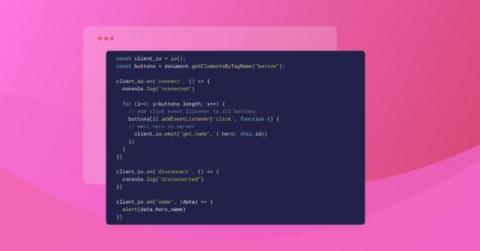
How to build a secure WebSocket server in Python

Typically, when a web app needs something from an external server, the client sends a request to that server, the server responds, and the connection is subsequently closed. Consider a web app that shows stock prices. The client must repeatedly request updated prices from the server to provide the latest prices.

Announcing customized role-based access controls for Snyk

As your development and security teams grow, it becomes critical that each of your team members using Snyk has only the required permissions to do their job. You need to ensure everyone can perform their jobs with ease, while also avoiding security and compliance issues. A developer, for example, needs the ability to find and fix vulnerabilities in his code but should not be able to change Snyk billing details.

Snyk is now also hosted in the EU providing regional data residency

From day one, Snyk’s vision has been to enable development and security teams across the world to develop fast while staying secure. A key component of this vision is ensuring our customers feel confident in using our developer security platform. This is why we place the utmost importance on keeping our customers’ data safe and helping them address their security and compliance requirements.

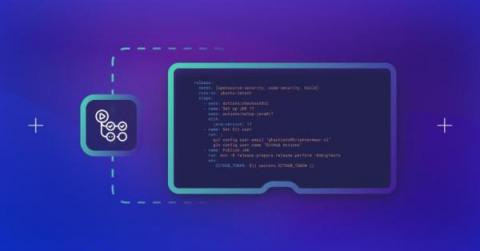
Building a secure CI/CD pipeline with GitHub Actions

GitHub Actions has made it easier than ever to build a secure continuous integration and continuous delivery (CI/CD) pipeline for your GitHub projects. By integrating your CI/CD pipeline and GitHub repository, GitHub Actions allows you to automate your build, test, and deployment pipeline. You can create workflows that build and test every pull request to your repository or deploy merged pull requests to production.