Security | Threat Detection | Cyberattacks | DevSecOps | Compliance

How Snyk helps satisfy White House cybersecurity recommendations

Our modern digital world has proven that global tensions between countries are not contained to the battlefield. As international cyberattacks and protestware proliferate, the Biden-Harris administration (White House) instructed US institutions, large and small, to be more vigilant about malicious cyber activity.

Improving coverage of cloud resources to reduce infrastructure drift

As developers, we need maximum visibility of what’s actually running in our cloud environments, in order to keep them secure. Infrastructure as code (IaC) helps developers automate their cloud infrastructures, so what’s deployed to the cloud is under control and can easily be audited. But achieving and maintaining 100% IaC coverage of your infrastructure has many challenges.

Best practices for containerizing Go applications with Docker

Containerization describes the creation of a self-contained computing environment that runs on a host machine and any operating system (OS) with an available container runtime engine. Built from an image, a container holds an app and the filesystem alongside configurations, dependencies, binaries, and other specifications needed to run it successfully. Containers are typically much smaller than virtual machines and run in the host’s OS rather than containing OSs themselves.

Protestware is trending in open source: 4 different types and their impact

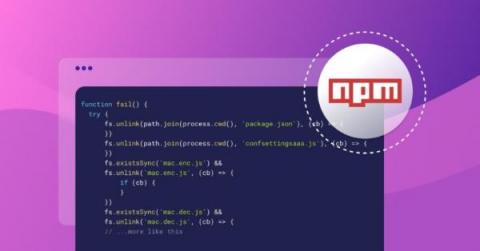
A few days ago, Snyk reported on a new type of threat vector in the open source community: protestware. The advisory was about a transitive vulnerability — peacenotwar — in node-ipc that impacted the supply chain of a great deal of developers. Snyk uses various intel threat feeds and algorithms to monitor chatter on potential threats to open source, and we believe this may just be the tip of a protestware iceberg.

node-ipc sabotages JavaScript developers

On March 15, in an apparent act of protest against the Ukraine crisis, a supply chain attack was created which affects users of the popular JavaScript front-end development framework Vue.js and the Unity Hub. The attack creates a file with an antiwar message and introduces security vulnerabilities, with an earlier version corrupting user files on machines with Russian and Belorussian geolocations, replacing characters with heart emoji.

dompdf security alert: RCE vulnerability found in popular PHP PDF library

Recently, researchers from Positive Security published findings identifying a major remote code execution (RCE) vulnerability in dompdf, a popular PDF generation library. In their reporting, they outlined a way that code could be loaded into an application and then remotely executed during a PDF being generated. Dompdf is used quite extensively within the PHP ecosystem, and is used within over 59,000 open sourced platforms and projects.

Linux 'Dirty Pipe' vulnerability: Snyk explains the risk and what you can do to protect your systems

Last week, a critical vulnerability was discovered in Linux. Developer-first security company, Snyk, warns Linux users of the flaw in the Linux kernel that can be exploited by attackers allowing any process to modify files regardless of their permission settings or ownership.

How to do password encryption in Java applications the right way!

There are multiple types of encryption and most ecosystems and languages come with many libraries to help you encrypt the data. The question nowadays is, what type of encryption should I pick for the problem. This article will focus on encrypting passwords for Java applications specifically. While we can apply the main principles to any ecosystem, we will explore examples and libraries in Java that are useful for your daily job.

10 tips for keeping your Docker containers safe from Log4Shell

Today we’re pleased to announce an update to our popular Docker and Snyk vulnerability cheat sheet. Since 2020, millions of MacOS and Windows developers have been able to use docker scan to analyze their containers in their local environments as part of their day-to-day development. This capability gives teams feedback at the time of active development for faster cycles.

Alert: peacenotwar module sabotages npm developers in the node-ipc package to protest the invasion of Ukraine

On March 15, 2022, users of the popular Vue.js frontend JavaScript framework started experiencing what can only be described as a supply chain attack impacting the npm ecosystem. This was the result of the nested dependencies node-ipc and peacenotwar being sabotaged as an act of protest by the maintainer of the node-ipc package.