Security | Threat Detection | Cyberattacks | DevSecOps | Compliance

2022 Cybersecurity Predictions - From Ransomware and Supply Chain Risks to Operational Technology and IoT

As we look ahead to 2022, we should pause to reflect on the trends of the past year. Ransomware and supply chain attacks have become two of the top concerns for organizations following a series of high-profile attacks, such as those conducted against Colonial Pipeline, SolarWinds and Kaseya. In 2021, our Project Memoria revealed close to 100 different vulnerabilities in common TCP/IP stacks, affecting hundreds of operational technology (OT) vendors.

Losing Control of Your Front Door

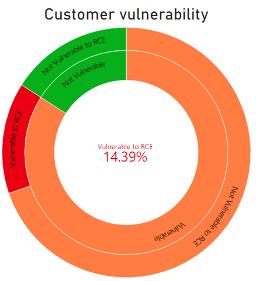
On November 10, 2021, Palo Alto Networks released advisories for eight different vulnerabilities affecting the company’s VPN firewall products. The vulnerabilities’ criticality ranges from ‘medium’ to ‘critical,’ with the most severe vulnerability, CVE-2021-3064 (CVSSv3.1 of 9.8), allowing for unauthenticated remote code execution, or RCE.

Accelerate security operations today and tomorrow with automation and AI

While we are a long way from implementing Skynet, using machine learning combined with automation to make real-time decisions is here. In a recent talk at Sumo Logic Illuminate, Dave Frampton, General Manager of Cloud SIEM and Security Analytics, discusses the future of security with Vijaya Kaza, Head of Engineering and Data Science for Trust & Safety and Chief Security Officer at Airbnb. Kaza describes how automation, machine learning and AI can strengthen a company's overall security posture.

Correctly Configure Your Clouds: It's More Than Just Settings

Gartner made an interesting prediction just a few years ago: “Through 2025, 99% of cloud security failures will be the customer’s fault.” Practically every single cloud security failure can be fairly described as a misconfiguration of one kind or another. The 2025 end is kind of arbitrary, really; the prediction is likely to be true until the end of time. In my previous article, I discussed targeting these misconfigurations at their root.

Predictions 2022: Work-from-anywhere Marks the Beginning of the End of On-premises Security

A decade ago, many were reluctant to move to the cloud. Many felt like they would have to relinquish controls they had within their perimeters. That sentiment has since reversed, where organizations have become more comfortable with cloud technology. The newest concern is about corporate data leaving the cloud, especially as employees expect to work from anywhere. Software-as-a-service (SaaS) applications have enabled people to stay productive from anywhere, but have also amplified security gaps.

Deploy a File Scanner for Sensitive Data in 40 Lines of Code

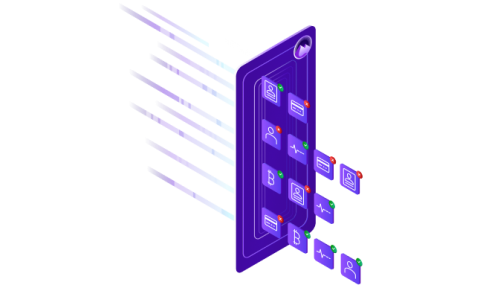
In this tutorial, we will create and deploy a server that scans files for sensitive data (like credit card numbers) with Nightfall’s data loss prevention APIs and the Flask framework. The service ingests a local file, scans it for sensitive data with Nightfall, and displays the results in a simple table UI. We’ll deploy the server on Render (a PaaS Heroku alternative) so that you can serve your application publicly in production instead of running it off your local machine.

Deploy a File Scanner with Nightfall Data Loss Prevention (DLP) API

In this tutorial, we will create and deploy a server that scans files for sensitive data (like credit card numbers) with Nightfall’s data loss prevention (DLP) APIs and the Flask framework. The service ingests a local file, scans it for sensitive data with Nightfall, and displays the results in a simple table UI. We’ll deploy the server on Render (a PaaS Heroku alternative) so that you can serve your application publicly in production instead of running it off your local machine.

Why Cyberattacks Increase During the Holiday Seasons

Cybercrime is a relevant threat any time of year, but especially during the holidays. The FBI recently issued a warning about rising ransomware attacks on holidays and weekends, a trend that is far from new but growing. As cybercrime continues to rise, holiday cybersecurity needs to improve. Many of the largest cyberattacks, including the Colonial Pipeline attack, have happened over various holidays. Smaller attacks tend to increase around these times of the year, too. Here are six reasons why.