Security | Threat Detection | Cyberattacks | DevSecOps | Compliance

The Complete Guide to SBOM Software Bill of Materials

A Software Bill of Materials (SBOM) is like an ingredient list for software. It provides a detailed inventory of all the components that make up an application, including open source libraries, proprietary code, packages, and containers. Just as food packaging lists ingredients to protect consumers and ensure safety, SBOMs do the same for software by giving visibility into what is inside.

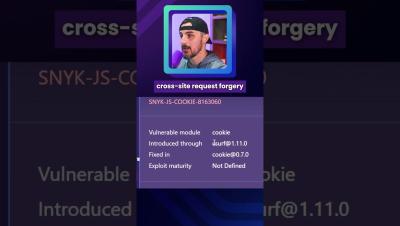
Phishing Scams: How to Spot & Stop Video Call Attacks! #cybersecurity

Mend.io, formerly known as Whitesource, has over a decade of experience helping global organizations build world-class AppSec programs that reduce risk and accelerate development -– using tools built into the technologies that software and security teams already love. Our automated technology protects organizations from supply chain and malicious package attacks, vulnerabilities in open source and custom code, and open-source license risks.

Introducing Mend Forge

Today, we’re thrilled to announce Mend Forge, our new AI native innovation engine and your window into what’s next in application security. At Mend.io, we believe that security innovation shouldn’t happen in a black box. The security landscape is shifting fast, driven by the explosive growth of AI generated code, AI powered applications, and rapidly evolving software supply chains.

Account Takeover Nightmare: Why You're Always Fighting Fires! #appsec #cybersecurity

Mend.io, formerly known as Whitesource, has over a decade of experience helping global organizations build world-class AppSec programs that reduce risk and accelerate development -– using tools built into the technologies that software and security teams already love. Our automated technology protects organizations from supply chain and malicious package attacks, vulnerabilities in open source and custom code, and open-source license risks.

How DevOps Teams Can Use IONIX for Zero-Fuss Daily Ops

Our DevOps environment moves fast. Cloud instances spin up and down. Containers launch and retire. New APIs appear without warning. Trying to track it all with scripts, spreadsheets, and one-off scans meant I often missed things. A TLS certificate would slip through. An open port would go unnoticed. I’d spend hours chasing down who owned an asset.

Continuous DAST in CI/CD Pipelines: A Practical Guide

Every pipeline shift introduces a new blind spot. SAST catches coding flaws, and SCA catches dependency risks; however, as delivery moves to CI/CD, new risks have emerged, not in the code itself, but in how it is executed. From broken access controls and authentication drift to logic flaws behind feature flags, these threats show up in production. Continuous DAST in CI/CD pipelines isn’t just “another layer” but a runtime check that’s most likely to catch what gets exploited.

What is AI system prompt hardening?

As generative AI tools like ChatGPT, Claude, and others become increasingly integrated into enterprise workflows, a new security imperative has emerged: system prompt hardening. A system prompt is a set of instructions given to an AI model that defines its role, behavior, tone, and constraints for a session. It sets the foundation for how the model responds to user input and remains active throughout the conversation.

Real-Time Image Switching: Upgrade Without Downtime! Tech Tip #podcast #tech

Mend.io, formerly known as Whitesource, has over a decade of experience helping global organizations build world-class AppSec programs that reduce risk and accelerate development -– using tools built into the technologies that software and security teams already love. Our automated technology protects organizations from supply chain and malicious package attacks, vulnerabilities in open source and custom code, and open-source license risks.