Exploring The Foundations Of Cybersecurity Compliance
State of Arizona and Arctic Wolf leaders share approaches to balancing cybersecurity compliance with multiple operational frameworks.


The updated ISO 27002 adds 11 new controls spanning a range of security services, including the addition of threat intelligence control 5.7. The ISO 27000 series is an industry standard that has long defined and dictated base-level requirements for organizations’ information security management systems (ISMS). Through more than a dozen standards, the framework helps organizations demonstrate management commitment to their ISMS as they regularly review and improve their systems and procedures.
Timerie Bahler is no stranger to digging deep into the data of organizations – from telecommunications to trucking and finance companies. Many different industries, with many different challenges. What they all have in common is that somewhere in the data there’s always something new to discover that has the power to enhance operations and bottom lines. And that keeps Timerie motivated, professionally, as she turns ostensibly hidden information into actionable insight.
Technological advancements have revolutionized the world’s cultural and economic institutions in almost every aspect. Unfortunately, they have also brought risks in the form of cyber threats. While there are various ways to mitigate such threats, paying importance to threat intelligence can make a difference to your organization.
Digital transformation is no longer a new concept – various business functions have already embraced cutting-edge technology to stay ahead of the curve. From IT, sales, and marketing to customer support and even finance, it is evident that most departments understand how integral the transformation is to gain a competitive advantage and continue to win customers. However, when it comes to Governance, Risk management, and Compliance (GRC), most are still stuck with archaic, ad-hoc processes.
HIPAA compliance is regulated by the Department of Health and Human Services (HHS) and enforced by the Office for Civil Rights (OCR). In 2013, the final Omnibus rule was enacted, binding business associates - or third-party vendors - to the Health Insurance Portability and Accountability Act. This modification added another level of compliance complexity to an industry not accustomed to operating in the cybersecurity domain - the healthcare industry.
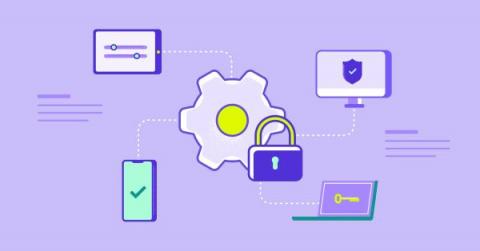
To build a strong security and compliance foundation, organizations need to be able to view, manage, and secure devices, such as laptops and desktops. If you’re new to security and compliance, you may be wondering how to tackle this problem—especially at scale. With effective mobile device management (MDM) software, your company can manage and secure employee devices used to access company systems and applications.
In 1974, the United States Congress created the Nuclear Regulatory Commission (NRC) in order to protect the health of citizens and the environment while at the same time ensuring that radioactive materials were used in a safe manner for civilian purposes.
Ransomware attacks continue to make headlines and cause havoc on organizations on an international scale. Unfortunately, we should expect that ransomware attacks will persist as one of the primary threats to organizations. Ransomware attacks have grown 350% in recent years, and while the best strategy is to prevent attacks from happening in the first place, there is no guarantee your data won’t be compromised.