Security | Threat Detection | Cyberattacks | DevSecOps | Compliance

How to Add Privacy to Your LangChain Agent in 3 Lines of Code

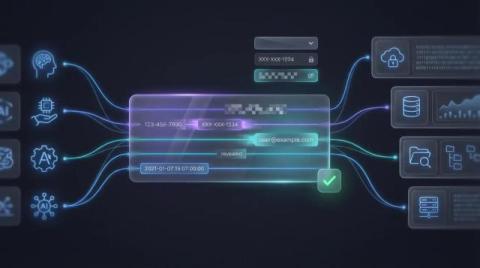
If you’re building with LangChain, you’re moving fast. That’s the point. Agents are pulling from tools, chaining prompts, summarizing documents, and responding to users in real time. But there’s a quiet truth many teams discover a little too late: Your agent is probably handling personal data—even if you didn’t design it to. Emails show up in prompts. Names appear in support tickets. Internal notes include phone numbers, IDs, or customer context.

No Snow Days for Security: How Reach Uses AI Agents to Find and Fix Hidden Risk

Security exposure doesn’t take a day off. Rain, snow or shine, environments keep changing. Controls drift. Configs break. Risk quietly piles up. Reach was founded to help organizations find and fix hidden risk and exposure. Traditional approaches surface issues — dashboards, alerts, findings — but stop short of actually fixing them.

How GenAI is Changing Data Security and What Enterprises Must Do

Generative AI (GenAI) is changing data security in today's businesses. It affects both cybersecurity defenses and the types of threats we face. Organizations encounter innovations that boost detection and automate tasks. However, these changes also create new avenues for attack. Security leaders must understand this duality to protect systems and information. This article examines the dual impact of GenAI on enterprise security. We cover the opportunities it creates for defense and the new risks it introduces. Finally, we outline actionable strategies to protect your organization.

What Are AI Browsers and Why Are They Becoming Essential?

AI browsers are a revolutionary change in our internet interaction. These web browsers use artificial intelligence as smart assistants. They understand user intent, summarize content, and automate tasks. Unlike traditional browsers, AI browsers provide a conversational and efficient experience. They move beyond one-time searches to offer a truly personalized interaction. This article explores their core features and concrete advantages. We'll examine how they save time, enhance security, and adapt to your unique needs. This makes a compelling case for why they are the new standard.

APT Teens, AI Voices and 2025 Helpdesk Attacks

The 2025 year in review episode shows how advanced threat groups rely on simple steps, from infostealer credentials to AI voice tools, to work through helpdesks. Native language, fake confusion and social engineering still unlock password resets in 2025, opening the door to ransomware and double extortion across networks.

AI Automation Dreams in the 2025 Security Budget Squeeze

The Razorwire Christmas Party 2025 review looks at rising expectations for AI and automation while security budgets stall in real terms. Automation in 2025 sits in a tug of war between cost cutting targets and the reality that attackers also use AI, so defensive upgrades have to match a live, adaptive threat.

Attackers Aren't Hacking Anymore - How Misconfigurations Became the Front Door

Looking for the perfect easy listening experience to kick off the holidays? We just published a full conversation between Garrett Hamilton, CEO & Co-Founder of Reach Security, and Todd Graham, Managing Partner at Microsoft’s venture fund M12. They talk through what's limiting security programs today — not lack of tools, but lack of operational clarity.

When Agentic AI Becomes an Attack Surface: What the Ask Gordon Incident Reveals

Pillar Security’s recent analysis of Docker’s Agentic AI assistant, Ask Gordon, offers an early glimpse into the security challenges organizations will face as AI systems begin operating inside the development stack. Their researchers discovered that a single poisoned line of Docker Hub metadata caused the agent to run privileged tool calls and quietly exfiltrate internal data.

AI and Data Security: Why Your Data Security Model Is Hurting Innovation

Why Your Data Security Model Is Outdated For over 20 years, we’ve focused on the Data Envelope—securing the perimeter, the cloud, and the network. But in a world of AI and rapid data sharing, protecting the envelope is not enough. In this video, James Rice (VP of Product Marketing at Protegrity) explains why traditional security has become the biggest bottleneck for modern innovation. Whether you are a security leader, a data architect, or a business innovator, understanding this paradigm shift is essential for the next decade of growth.