Security | Threat Detection | Cyberattacks | DevSecOps | Compliance

Make Doodle-Style Videos Using the AI Video Maker Sketch Mode

Doodle-style videos have become a booming trend due to the simplicity and high engagement. Their hand-drawn style is easy to notice and the content is easy to remember. The sketches in the cartoon automatically draw the audiences into any story whether it is informative, advertising or autobiographical. Doodle animation was once a complex operation that demanded advanced skills, specialized software and hours of work. The process is now made easier by AI-assisted tools that enable creators to create sophisticated, refined doodle animations with little knowledge of technical skills.

Top tips to keep your wearables from leaking your health data

Top tips is a weekly column where we break down what's shaping the tech landscape and share practical ways you can stay informed and protected. This week, we’re looking at why safeguarding the health data collected by wearables is just as important as tracking your fitness goals. Wearables don't just track steps and sleep, they collect some of the most intimate health information we have, including: heart rate, blood sugar, medication routines, stress levels, and sleep patterns.

Server Side XSS Explained Simply with Examples

Did you know that over 30% of all web application vulnerabilities reported each year involve Cross Site Scripting (XSS)? And among them, Stored or Server Side XSS is consistently ranked as one of the most dangerous forms, because a single injected payload can silently impact hundreds or even thousands of users without any interaction.

APIs are the Language of AI. Protecting them is Critical.

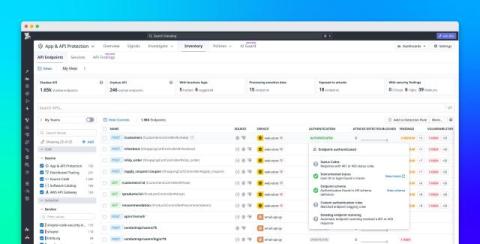
APIs are the Language of AI. Protecting them is Critical. In this discussion, A10 Networks security experts Jamison Utter and Carlo Alpuerto explore the emerging impact of Agentic AI on the API security landscape. They delve into how AI agents, as new API consumers, are driving an explosion in endpoints and exacerbating existing security issues, pushing API protection higher up the security practitioners' priority list.

The Mythical 1+1=3 Model in Cybersecurity

The mythical 1+1=3 model in security? It happens when the tools you already own stop working in isolation — and start working as a system. Jay Wilson and Garrett Hamilton dig into why Reach’s platform approach matters: not just enhancing individual controls, but creating compounding value across identity, endpoint, email, and network. When visibility, configuration, and enforcement align, the outcome isn’t incremental — it’s exponential.

Technology Is Ready, Mindsets Need to Catch Up

Security technology for access control already exists, but success depends on mindset and the willingness to change course when conditions shift. The idea of being audible ready, switching plays at the line based on what appears in front of you, mirrors how security leaders adjust identity strategy and embrace change despite human resistance.

Best Practices for Implementing Data Tokenization

Data is no longer confined to a few clean relational systems. It now flows through microservices, data lakes, event streams, vector databases, and LLM pipelines. Sensitive information spreads quickly, and once it reaches ungoverned surfaces—logs, analytics exports, embeddings—it becomes extremely painful to unwind. Tokenization is one of the few controls that can both minimize data exposure and preserve business functionality.

React and Next.js unauthenticated remote code execution (CVE-2025-55182, CVE-2025-66478)

On 29 November 2025, researcher Lachlan Davidson reported a critical React vulnerability that allows unauthenticated remote code execution via specially crafted React Server Function payloads. This vulnerability was disclosed as CVE-2025-55182 (React) and CVE-2025-66478 (Next.js) and is rated CVSS 10.0. A public proof concept has also been released so patching is of utmost importance.