Security | Threat Detection | Cyberattacks | DevSecOps | Compliance

CrowdStrike FalconID Brings Phishing-Resistant MFA to Falcon Next-Gen Identity Security

FalconID is now generally available, bringing phishing-resistant MFA to the CrowdStrike Falcon platform and advancing CrowdStrike’s leadership in identity security. Adversaries continue to use legitimate identities to infiltrate and navigate organizations while evading defenses. As they adopt AI, the scale and impact of social engineering and credential abuse are growing. AI-enhanced phishing, MFA fatigue, and session hijacking enable threat actors to bypass MFA.

Leadership Expectations From Cybersecurity Teams Have Fundamentally Changed

In Episode of Guardians of the Enterprise, Ashish Tandon, Founder & CEO, Indusface, spoke with Madhur Joshi, CISO at HDB Financial Services (part of the HDFC Group), about how leadership expectations from cybersecurity are evolving. They discussed how boards today are looking beyond traditional security metrics, with a sharper focus on third-party risk, data governance, and organizational resilience.

Emerging Threat: Cisco Catalyst SD-WAN Authentication Bypass (CVE-2026-20127)

CVE-2026-20127 is a critical authentication bypass vulnerability affecting Cisco Catalyst SD-WAN Controller (vSmart) and Cisco Catalyst SD-WAN Manager (vManage). The flaw stems from improper validation within the control plane and management plane authentication mechanisms, allowing a remote, unauthenticated attacker to submit crafted requests that bypass standard authentication controls. Successful exploitation results in access to the system as a high-privileged internal user account.

LevelBlue SpiderLabs: APAC Emerges as Primary Target for Manufacturing Cyberattacks

The Asia-Pacific region is home to the highest concentration of manufacturing sites on the planet, so it comes as no surprise that manufacturers here absorb more attacks than the rest of the world combined. LevelBlue SpiderLabs compiled the Manufacturing Threat Landscape 2025 report, which noted that 56% of all attacks targeting the manufacturing sector occurred in the APAC region. This is compared to 22% in North America, Europe (16%), and Africa (2%).

Governing Agentic AI: A Practical Framework for the Enterprise

In my previous piece, "The Agentic AI Governance Blind Spot," I laid out what I believe is one of the most critical gaps in the AI governance landscape today: the three most cited frameworks in AI governance, NIST AI RMF, ISO 42001, and the EU AI Act, don’t contain a single mention of agentic AI. Not one reference to autonomous agents, multi-agent systems, or AI that takes actions with real-world consequences. The response to that piece confirmed what I suspected.

Mapping and Managing AI Supply Chain Risk (Featuring Panorays)

-Recent breaches show AI risk is already present in many environments, often entering through suppliers, data flows, and integrations. But awareness alone is not enough. CISOs and security leaders must actively manage the expanded attack surface AI creates. In this session, experts from CyCognito and Panorays help you understand how to identify AI relationships, assess the risks they pose, and remediate vulnerabilities before they lead to an incident. You’ll learn.

SafeBreach's Evolution into an AI-First Development Team: Part 2

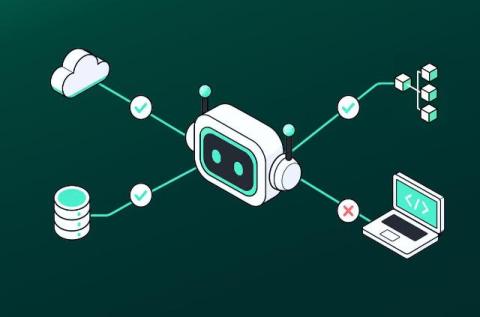
In this second installment of a series on the transformation of SafeBreach’s development organization, VP of Development Yossi Attas details a structured operational workflow that integrates Jira, BitBucket, and Claude Code to turn AI usage from ad-hoc prompting into a rigorous engineering methodology.

Why Threat Actor Context Matters for Cyber Risk Prioritization

Cyber threat intelligence is often presented as a catalog of named threat actors, past incidents, and attribution labels that promise clarity. For defenders trying to understand risk, this structure feels reassuring. It suggests that threats can be identified, tracked, and anticipated based on observed behaviors. In practice, that confidence is often overstated.