

Security | Threat Detection | Cyberattacks | DevSecOps | Compliance

Meeting the Retail Industry's Evolving Cybersecurity Needs

Retailers face increasing cybersecurity threats while navigating stringent compliance requirements. With an extensive digital presence across physical stores, e-commerce platforms, and supply chains, retailers are prime targets for cybercriminals seeking to steal financial and personal data. Ransomware attacks, phishing, and point-of-sale (POS) system breaches can lead to substantial financial and reputational damage.

Decipher Me. What Hack Can You Detect?

What do people love more than secrets? Deciphering them. Join Etay Maor, founding member of Cato CTRL and chief security strategist at Cato, as he exposes the hidden mechanics behind AI prompt injections. From the secret codes of espionage to the subtle tricks of modern cybercriminals, this session connects the dots between history’s ciphers and today’s AI vulnerabilities. Because every secret has a pattern—if you know where to look.

XDR meets AIOps for Faster AI-Driven Detection and Resolution

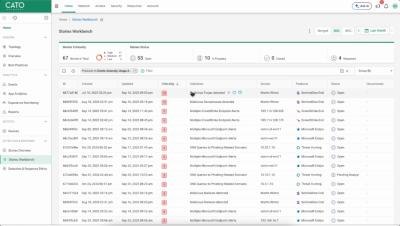
Discover how Cato Networks helps you respond to security and networking issues quickly, easily and efficiently, in one place, with the AI power of Cato XOps. Watch this demo to see how XOps brings together XDR and AIOps to cut through huge volumes of events and alerts and provide one place to see what’s important, to investigate issues, and to mitigate threats quickly - across networking and security.

Unmanaged Doesn't Have to Mean Unprotected

Today’s enterprises are more fluid than ever. Employees work from personal devices, contractors join from unmanaged devices, and IT teams are expected to secure it all—without adding complexity or degrading performance. But most secure access tools were never built for this reality. The Cato Browser Extension offers a better way forward. It brings zero-trust access to unmanaged devices, BYOD, or third-party systems without installing endpoint software.

Cato Browser Extension: Secure Access for Any User

Unmanaged and BYOD devices create significant security and compliance challenges for today's enterprises. The Cato Browser Extension addresses these issues head-on by providing secure, lightweight, and consistent browser-based access for contractors, vendors, and remote workers—without the headaches of traditional VPNs.

Future-Proof Your Business with SASE and Zero Trust

Today’s enterprises are facing relentless change. Digital transformation, cloud migration, hybrid work, and M&A are moving faster than most IT organizations can keep up with. While the business demands speed and agility, IT and security teams are often constrained by fragmented tools, legacy systems, and skill shortages. As a result, CxOs are caught between two priorities: enabling innovation and ensuring a secure enterprise.

Cato ZTNA: True Zero Trust Without Trade-Offs

Remote access is evolving – and legacy VPNs can’t adapt. In this video, see how Cato ZTNA delivers secure, scalable, and seamless access without the trade-offs of traditional VPNs or basic ZTNA tools. Discover how Cato provides: Universal ZTNA with one unified access policy everywhere Real-time Context Sharing for consistent enforcement across networking and security Zero Trust for Anyone, Anywhere, delivering secure access for all users and devices, including BYOD and contractors.

Read the SASE reviews, then read between the lines.

Every single-vendor SASE provider claims convergence, cloud-native design, advanced security, Zero Trust, and AI readiness. That’s the baseline. What enterprises need to know is how those claims hold up after deployment. Most head to Gartner Peer Insights as part of their recon because real-world feedback is the best reality check. Gartner is arguably the most recognized analyst in tech, trusted by thousands of organizations for impartial, considered research.

Tenant Matters: Enabling Safe SaaS Adoption with CASB Tenant Awareness

Imagine your marketing team needs to share a product roadmap with a partner, so they drop it into a shared OneDrive folder. Everything looks fine — same interface, same app — but no one realizes the file was uploaded to the partner’s personal OneDrive account instead of their corporate tenant. Days later, the file is still accessible from an unmanaged device, with no audit trail, no data loss protection, and no way to revoke access.