Security | Threat Detection | Cyberattacks | DevSecOps | Compliance

From CVE Disclosure to Agentic Protection in 45 Minutes. Why it Matters Now.

A CVE lands in the morning. Hours later, attackers are exploiting it in the wild. The patch is not ready, the change window is days away, and the clock is already running. None of this is new. What changed is that vulnerability exploitation is now the most common path into organizations.

Cato Expands the Power of the Platform with New Technology Ecosystem

Modern IT and security teams no longer evaluate platforms in isolation. They ask how a platform fits into the architecture they run, the workflows they trust, and the outcomes they need to improve. Enterprise stacks are not isolated; they are interdependent. Identity shapes access, endpoint posture influences policy, while SIEM tools drive investigations and rely on shared data and context. AI tools introduce new layers and patterns of usage, risk, and data movement across the network.

Cato CTRL Threat Research: From Fiscal Lures to Remote Access, A Previously Undocumented NinjaOne RMM Abuse Chain

Cato CTRL researchers recently identified an undocumented, active phishing campaign targeting Brazilian organizations with fake business-document lures, downloading a NinjaOne Remote Monitoring and Management (RMM) agent. The use of NinjaOne is particularly significant, underscoring how attackers no longer need exotic malware to penetrate an enterprise. Familiar business workflows and software is enough.

Reducing Time-to-Protect with Cato's Self-Evolving Vulnerability Protection Agent

TL;DR: In the age of frontier AI models, vulnerability discovery and exploit development are scaling faster than human defenders can manually respond. Security teams already face growing CVE volumes, shorter exploitation windows, and manual workflows for researching vulnerabilities, creating protections, validating them, and preparing them for deployment. As attackers weaponize vulnerabilities faster than organizations can patch them, time-to-protect is becoming a critical security metric.

Private App Access, Zero Network Change

As organizations advance toward Security Service Edge (SSE), secure access to private applications has become a practical priority. Executives rightly expect these programs to improve security while increasing agility. Yet many initiatives slow down at the same point: extending access to private applications. The work often depends on firewall exceptions, routing changes, and cross-team coordination, followed by tightly controlled maintenance windows.

What Consistent Leadership Across SSE, SD-WAN, and SASE Signals

GigaOm’s latest analysis highlights a clear shift in the market. As they note, “The standalone Secure Service Edge (SSE) market has largely disappeared, with leading vendors now offering complete SASE solutions that converge software-defined wide-area network (SD-WAN) and SSE into single-vendor platforms. Organizations increasingly favor this consolidated approach to reduce operational complexity and improve visibility.”

Cato CTRL Threat Brief: AI, Zero-Days, and the US-China Cyber Arms Race

Underlying the US–China AI race, there’s arguably a more sinister arms race—the race to identify zero-day threats. Frontier AI algorithms, such as Anthropic Mythos (here) and China’s Qihoo 360 (here), are compressing the zero-day discovery cycle. But how those discoveries are gathered and shared among cooperating entities is giving China significant defensive and offensive advantages.

Defending Against the Next Generation of Agentic Attacks

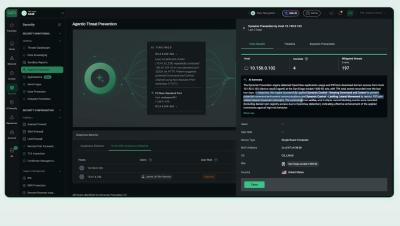
The attack lifecycle is compressing. Frontier AI models like Anthropic’s Mythos and OpenAI’s GPT-5.5-Cyber can help bad actors research vulnerabilities, test approaches, adapt code, and change delivery methods at machine speed and scale. That reduces the time, skill, and coordination needed to move from vulnerability discovery to active attack. When attacks behave this way, security needs to operate in real time with full visibility and context across the attack path.

Cato Private Access: Zero Trust Access Without the Operational Overhead

Most organizations understand the need for Zero Trust access to private applications. The challenge is delivering it without creating operational bottlenecks, increasing network risk, or slowing projects with weeks of coordination. In this video, Chris Rudolph explains how Cato Private Access enables secure, application-level access to private applications without requiring routing updates, inbound firewall changes, or complex network redesigns.

Stop Treating AI Like Another SaaS App

Employees are leveraging AI to boost productivity and adopt skills that would take years to learn. This ranges from drafting content, writing code, and building automated workflows. Some of this use is approved. Much of it is not. For many security teams, the first instinct is to treat this risk like they would any other SaaS risk: discover the app, allow or block access, apply DLP rules, and report on usage. That model works for traditional SaaS, but AI is different.