Learn how five years of security innovation from cloud-native threat detection to AI security and an autonomous SOC earned Elastic the newest recognition from AWS.
Attackers are using AI to compress timelines from hours to minutes. Most SOCs, and most security platforms, weren’t built for that speed. Join Elastic Security product and research experts for a look at how modern security teams can detect, investigate, and respond faster using agentic AI. You’ll learn how to: You’ll leave better equipped to reduce investigation time, keep analysts focused on decision-making, and modernize security operations for machine-speed threats without removing humans from the loop.
Elastic has been named a Strong Performer in The Forrester Wave: Extended Detection And Response Platforms, Q2 2026 report. The report recognized our SIEM-replacement capabilities, open data architecture, AI innovation, and endpoint protection. Here's what Forrester found and why we believe it reflects what we've been building.
The agentic security operations platform As more people across an organization start using Claude, security and compliance teams end up asking the same questions they ask about any other system: Who’s using it? How are they signing in? Who’s changing the configuration? Claude’s Compliance API answers all of that. It tracks more than 300 event types across Claude Enterprise, Claude Team, and Claude Platform, and every event arrives with the actor, a timestamp, and where it came from.
Compliance has traditionally lived in dashboards, spreadsheets, screenshots, audit packets, and point-in-time reviews. Security teams know the reality is more dynamic. The evidence auditors need is often buried across identity providers, endpoints, cloud platforms, network controls, vulnerability scanners, alerts, and custom application logs — all generating live operational telemetry that static tools struggle to keep up with.
Adversaries are using AI to launch cyber attacks in record time, forcing security teams to measure responses in seconds instead of hours or days. Detecting these attacks is increasingly difficult. Phishing campaigns built by large language models (LLMs) achieve click-through rates 4.5x higher than traditional methods.1 Public sector organizations are at an inflection point with cybersecurity. Most security stacks in place today weren’t built for this level of speed.
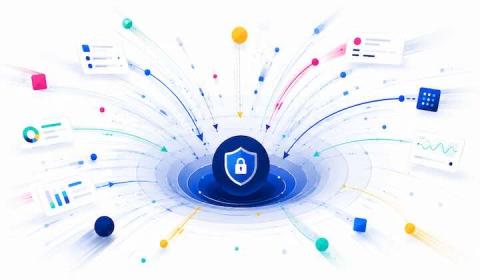
Security teams ingest massive volumes of telemetry from endpoints, cloud workloads, identity providers, and network controls. The goal is faster threat detection and shorter incident response times. But the reality is that all of this data becomes harder to move, slower to query, and messier to analyze as it grows. That's data gravity, and it's the biggest barrier to effective AI in cybersecurity.
In the public sector, it’s not uncommon for disruptions of critical infrastructure to ripple outward and wreak major havoc on systems and communities whether the cause is a technical issue, a natural disaster, or a cyber attack. As critical infrastructure becomes more connected through distributed systems and IoT devices, the attack surface continues to expand.
You've done the work. Logs are flowing. Rules are enabled. Agents are deployed. Dashboards exist. But if your CISO, an auditor, or a red team report asked if your SIEM is ready to detect and respond to the threats that matter, could you answer confidently? Most teams can't.