Security | Threat Detection | Cyberattacks | DevSecOps | Compliance

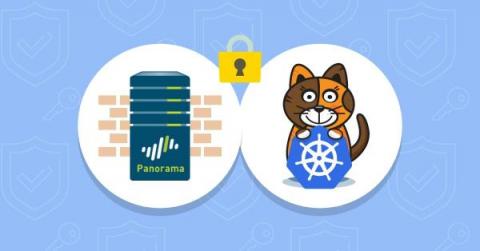
Workload access control: Securely connecting containers and Kubernetes with the outside world

Containers have changed how applications are developed and deployed, with Kubernetes ascending as the de facto means of orchestrating containers, speeding development, and increasing scalability. Modern application workloads with microservices and containers eventually need to communicate with other applications or services that reside on public or private clouds outside the Kubernetes cluster. However, securely controlling granular access between these environments continues to be a challenge.

Kubespray 2.17 released with Calico eBPF and WireGuard support

Congratulations to the Kubespray team on the release of 2.17! This release brings support for two of the newer features in Calico: support for the eBPF data plane, and also for WireGuard encryption. Let’s dive into configuring Kubespray to enable these new features.

Why securing internet-facing applications is challenging in a Kubernetes environment

Internet-facing applications are some of the most targeted workloads by threat actors. Securing this type of application is a must in order to protect your network, but this task is more complex in Kubernetes than in traditional environments, and it poses some challenges. Not only are threats magnified in a Kubernetes environment, but internet-facing applications in Kubernetes are also more vulnerable than their counterparts in traditional environments.

Calico integration with WireGuard using kOps

It has been a while since I have been excited to write about encrypted tunnels. It might be the sheer pain of troubleshooting old technologies, or countless hours of falling down the rabbit hole of a project’s source code, that always motivated me to pursue a better alternative (without much luck). However, I believe luck is finally on my side.

Kubernetes security issues: An examination of major attacks

In a never-ending game of cat and mouse, threat actors are exploiting, controlling and maintaining persistent access in compromised cloud infrastructure. While cloud practitioners are armed with best-in-class knowledge, support, and security practices, it is statistically impossible to have a common security posture for all cloud instances worldwide. Attackers know this, and use it to their advantage. By applying evolved tactics, techniques and procedures (TTPs), attackers are exploiting edge cases.

Kubernetes security policy design: 10 critical best practices

In this blog post, I will be looking at 10 best practices for Kubernetes security policy design. Application modernization is a strategic initiative that changes the way enterprises are doing business. The journey requires a significant investment in people, processes, and technology in order to achieve the desired business outcomes of accelerating the pace of innovation, optimizing cost, and improving an enterprise’s overall security posture.

Upgrading DevSecOps with compliance automation - Bryan Langston, Mirantis

Compliance automation is a commonly overlooked area of Kubernetes observability. The question is: how do you automate compliance to a security framework that isn’t well understood by DevSecOps teams to begin with? This lack of understanding contributes to mismanaged compliance efforts and in a worst-case scenario, audit exposures and organizational risk. This talk will walk through an example of how to 1) map compliance controls to specific Kubernetes technical configuration 2) automate the assessment of those controls 3) visualize the assessment results. DevSecOps teams will better understand how to incorporate compliance automation alongside security automation.

Building secure and observable Kubernetes platforms for scaled software delivery

"Companies of various sizes are building their applications on Kubernetes because it provides significant operational benefits like autoscaling, self-healing, extensibility, and declarative deployment style. However, the operational benefits are only a starting point down the path of building a secure and observable platform that enables the continuous delivery of application workloads. This session shows how to build a fully operational platform, leveraging platform-oriented building blocks to address network security and observability.

Exploring intrusion detection techniques in cloud native environments - Garwood Pang, Tigera

As more production workloads migrated to the cloud, the need for Intrusion Detection Systems(IDS) grew to meet compliance and security needs. With the number of workloads in each cluster, IDS needs to be efficient to not take up the shared resources. Techniques such as packet inspection and web application firewalls provide a solid defense against threats and by leveraging the cluster's network control pane, we are able to selectively choose vulnerable workloads and provide an easy way to trace back to the origin of the attack.