Security | Threat Detection | Cyberattacks | DevSecOps | Compliance

AI Quality EXPLODES Unlock Productivity SECURELY & FAST! #podcast #cybersecurity

On this episode of Masters of Data, Adam White and David Girvin dig into Sumo Logic's freshly launched compliance apps for Claude, ChatGPT, and LiteLLM, and why your IT team will want to pay attention before the token bill arrives. We unpack how enterprises can move beyond the "AI black hole" era of shadow IT and actually get eyes on who is using what, how much it is costing, and whether any of it is moving the needle.

Why Traditional Security Fails Against AI Attacks | Fidelis Deception

AI-powered cyber attacks are evolving faster than traditional defenses can respond. Modern attackers use valid credentials, native tools, and AI-assisted reconnaissance to move through enterprise environments without triggering conventional security controls. Signature-based detection and behavioral analytics often struggle to detect these advanced intrusions before damage is done. In this video, discover how Fidelis Deception helps security teams detect and disrupt AI-accelerated attacks by turning attacker reconnaissance into immediate detection.

How link analysis unravels identity mule rings

Identity verification helps prevent fraud by requiring would-be fraudsters to verify that they are real people and who they say they are. But what about a user who opens an account with their legitimate ID and selfie and then hands the keys to a bad actor? That’s exactly what happens with identity muling, and this type of second-party fraud can be difficult to detect.

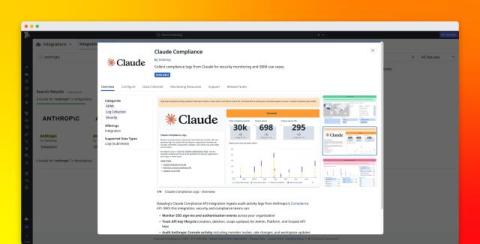
Monitor Claude Enterprise activity with Datadog Cloud SIEM

As Claude adoption expands across enterprises and workflows, security and compliance teams need to understand who is using Claude Enterprise, how it is accessed, and how it is administered and configured across the organization. The Claude Compliance API gives organizations access to valuable activity data that supports security monitoring, investigations, and governance initiatives.

Zenity Labs: The Bleeding Edge

At Zenity, we like to say we don't only exist on the bleeding edge; we are the bleeding edge. It's a defensible claim. Zenity Labs consists of multiple teams focused on various technical disciplines within the security industry, and while the Labs moniker sits loosely over the group, the work it produces tells a unified story around AI Agent security.

How to Create a Disaster Recovery Checklist

Disasters are no longer defined simply by acts of nature. Nowadays, a localized electrical failure can crash global communications and bring online transactions to a sudden halt. Modern businesses rely on worldwide networks, web applications, and 24x7x365 customer call centers, making continuous operation an absolute necessity. When an unplanned outage strikes, your organization needs a reliable way to maintain alternative processes and keep IT systems running smoothly.

Everyone Is Buying AI Guardrails. But Agents Have the Keys to the Car.

The first wave of AI security looked a lot like a WAF for LLMs: inspect the prompt, filter the output, block the obvious bad patterns. That was useful. It still is. But it was built for systems that mostly talked. Agents are different. They use tools, call APIs, access data, and change things. The confusion I keep seeing is simple: many teams think securing the model means securing the agent. It does not.

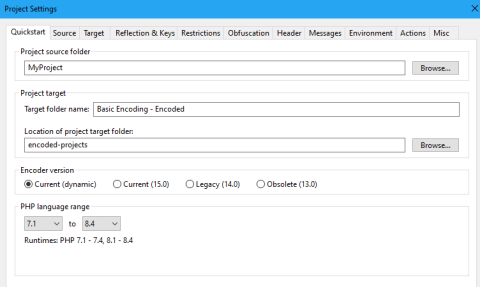
ionCube Loader - Running existing encoded files on future PHP versions

ionCube Loader is the runtime partner to ionCube Encoder which actually runs your encoded files on deployment machines. One useful feature of the Loader is that it includes runtime compatibility support which allows existing encoded files to run on future PHP versions where technically possible. This capability helps software vendors adopt newer PHP releases with greater flexibility as they won’t always need to re-encode and redistribute code in order to support new PHP versions.

CI/CD Security Controls for Mobile App Pipelines: The DevOps Manager's Toolkit

You run the pipeline. You own the releases. And somewhere between the security team's findings and the development team's sprint, you're the one getting asked to explain why nothing is getting fixed. That's not a security problem. It's a coordination problem, and it's structural. According to the DuploCloud AI + DevOps Report, Sep 2025, The pipeline is under more pressure than it's ever been. The attack surface is wider than it's ever been.