Security | Threat Detection | Cyberattacks | DevSecOps | Compliance

Container images simplified with Ko

In a previous article, I wrote about how — and why — you might want to use the Google Open Source group’s Jib tool to build your Java application container images. Jib builds slim, JVM-based, OCI-compliant images that follow best practice guidelines without the need for a container runtime like Docker, and it removes the need to write and manage Dockerfiles. What if you are building Go applications, though?

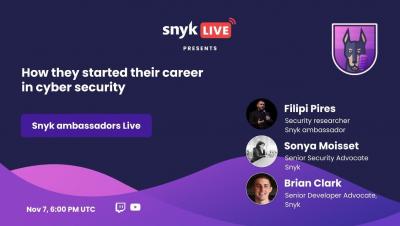
Security lessons with a Snyk Ambassador

Security has been a concern in the tech industry for years now. However, not a lot of companies follow their own protocols or guides when it comes to securing code. It’s easy to believe that security incidents are uncommon (or unlikely to happen in your own organization), but the latest issue with Uber is one of many examples to the contrary.

Red teams vs blue teams: Breaking down security roles

Red teams, blue teams, and purple teams, oh my! Many of us have heard these terms, but what exactly do they mean? And where does our individual interest and expertise place us? There are many niche roles within security, but this post will cover the basics of red, blue, and purple teams, and explain how they work together to enhance an organization’s security posture.

Cloud security fundamentals part 1: Know your environment

140,000 Social Security numbers and about 80,000 bank account numbers — that’s what one attacker stole from a major financial institution back in 2019. How did it happen? The attacker used firewall credentials to obtain privilege escalation and hack into improperly secured Amazon cloud instances.

Stranger Danger: Your JavaScript Attack Surface Just Got Bigger

Building JavaScript applications today means that we take a step further from writing code. We use open-source dependencies, create a Dockerfile to deploy containers to the cloud, and orchestrate this infrastructure with Kubernetes. Welcome - you're a cloud native application developer! As developers, our responsibility has broadened, and more software means more software security concerns for us to address.

How to hack a vulnerable OWASP Node.js apps: Part 2 | Snyk

How to hack a vulnerable OWASP Node.js Apps We are back with part 2 of this livestream. Join us as we demonstrate how you can use the Node.js app. We also show the various ways it can be hacked so you can learn how to prevent it. Didn't catch the live stream? Ask all of your Snyk questions and we’ll do our very best to answer them in the comment section.

2022 Collaboration Partner of the Year: Snyk

This week, at HashiConf 2022, Snyk was recognized by HashiCorp as the winner of the 2022 Collaboration Technology Partner of the Year award. Carey Stanton, Snyk’s Senior Vice President of Business Development, was in Los Angeles and accepted the award on stage at HashiConf. Snyk is honored to be named HashiCorp’s 2022 Technology Partner of the Year for Collaboration.

Snyk named a 2022 Gartner Peer Insights Customers' Choice for Application Security Testing

Snyk, the leader in developer security, is excited to share that we’ve been named a Customers’ Choice in the 2022 Gartner Peer Insights ‘Voice of the Customer’: Application Security Testing. Gartner defines the Application Security Testing category as products and services designed to analyze and test applications for security vulnerabilities. This distinction is based on meeting or exceeding overall rating, user interest, and adoption.

Snyk and HashiCorp: The Snyk IaC Integration With HashiCorp Terraform Cloud and Terraform Enterprise

In this video, learn about the Snyk IaC integration with HashiCorp Terraform Cloud and Terraform Enterprise, which enable developers to automate security checks and ensure public cloud environments are secure and compliant pre-deployment — directly in their Terraform Cloud pipelines.