Security | Threat Detection | Cyberattacks | DevSecOps | Compliance

Announcing: Code-free API log collection and parser creation

AT&T Cybersecurity is pleased to announce a code-free way for our USM Anywhere customers to make their own API-driven log collectors and custom parsers. This big advancement in threat detection and response technology will make it possible for customers to collect information from a much larger variety of sources and SaaS services without having to request new integrations or log parsers.

Introducing the Ransomware Content Browser

Splunk SURGe recently released a whitepaper, blog and video that outline the encryption speeds of 10 different ransomware families. The outcome of this research was that it is unlikely that a defender will be able to do anything once the encryption has started. Ransomware today is also mostly “human-operated” where many systems are sought out and compromised before any encryption activities occur and, once they do, the encryption is just too fast to meaningfully affect the damage done.

Coffee Talk with SURGe: Signal Numbers Exposed, FTC Data Privacy Rules, Conti Ransomware, E2EE

Grab a cup of coffee and join Ryan Kovar, Mick Baccio, and Audra Streetman for another episode of Coffee Talk with SURGe. This week they discussed Signal's response to the Twilio breach, the FTC's effort to create new data privacy rules, and a $10 million reward for information about a suspected Conti ransomware operator.

Using Threat Intelligence To Advance Your Security Posture

People often ask me, “What’s the purpose of cybersecurity?” I tell them that it serves to protect the valuable, intangible data assets of firms or private individuals, usually by trying to shrink the attack surface. One way to achieve cybersecurity is to utilize threat intelligence research in your firm’s security plan. In this article, I will discuss the benefits of understanding and implementing a threat intelligence program.

Graylog Security Anomaly Detection: Metrics Ease the Workload

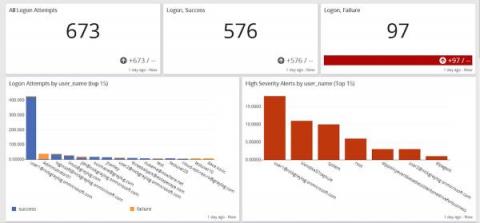
Everything that makes employees’ lives easier, makes yours harder. Detecting insider threats — both employees and cybercriminals pretending to be employees — has never been more difficult or more important. The cloud technologies that make everyone else more efficient make security less efficient. They’re noisy. They send a lot of alerts. You’re tired. You’re overworked. You’re overloaded.

Cyberattacks in 2022: Beware These 5 Attack Types

Cyberattacks are constantly changing. That you know. But how are they changing? And which types of threats are the most prominent today? Those are the real questions you need to answer to stay ahead of modern security risks. Keep reading for a primer on the most prevalent types of cyber security threats in 2022, along with insights on how to build a defense strategy against them. (For a comprehensive view, check out our cybersecurity threats explainer.)

Splunk Announces Participation in the Open Cybersecurity Schema Framework (OCSF) Project

There’s a myth from antiquity known as the Tower of Babel, where people were working together to build a tower to the heavens, only to lose the ability to communicate with one another via divine intervention. Essentially, the groups began speaking their own languages and were unable to complete the tower. So, why are we talking about myths in a cybersecurity blog?

The Democratization of Data: The Pros & Cons of All That Data

Try going one day without navigating today’s data landscape — accepting or declining cookie pop-ups, determining whether and how a company can use your information, and all the data you’re generating simply by browsing the web. Yes, we live in the Data Age. We know we generate mind-boggling amounts of data. The data we generate in a single day is an unfathomable amount (2.5 quintillion bytes if you can do that math). More formally, we say that data has been democratized.

Automated incident response using Log360

Security teams are often overwhelmed with alerts daily, including false positives, and actions that require attention but might be placed on the back burner. But when alerts start stacking up and aren’t addressed promptly, important security concerns might go unnoticed and these can spiral into a data breach. The time to detect and respond to security incidents should be as short as possible to limit the time an attacker can carry out an attack.