Security | Threat Detection | Cyberattacks | DevSecOps | Compliance

Security 101: Vulnerabilities, Threats & Risk Explained

In cybersecurity, the things to consider are endless. Before we get ahead of ourselves, let’s make sure we fully understand three fundamental concepts of security: In this article, we’ll look at these security concepts in depth and hear from industry experts. (For the latest and greatest in all things security, check out the Splunk Security Blog & these Cybersecurity and InfoSec Events & Conferences.)

Enhance Your Security Operations with SciSec Activeboards

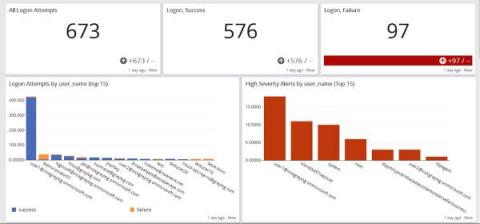
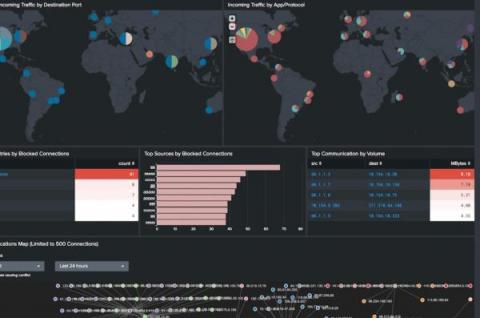
With the overwhelming amounts of data, security teams need dynamic, real-time visualization capabilities to quickly make sense of the data they need to manage so they can take action where needed and convey the status of their security posture. Devo makes these objectives easy to accomplish using Activeboards.

Defense Department's Multi-Cloud Cloud Strategy: A Role for SIEM

It’s difficult to recall a time over the last ten years when cloud requirements were not at the forefront of the Defense Department’s modernization efforts. Cloud capability reviews and requirements, in some form, extend from the Pentagon’s net-centricy efforts — to the Joint Information Environment, Digital Modernization, and up through to today.

Coffee Talk with SURGe: Twitter Whistleblower, Roasting Oktapus, Montenegro Cyberattack

Grab a cup of coffee and join Ryan Kovar, Mick Baccio, and Audra Streetman for another episode of Coffee Talk with SURGe. The team from Splunk will discuss the latest security news including: Mick and Ryan competed in a 60 second charity challenge to explain why they think password managers are still your best option for password security. The team also discussed data privacy after the FTC announced it is suing a data broker for selling geolocation data. Meanwhile, the FCC is launching an investigation into mobile carriers' geolocation data practices.

Introduction to Splunk Common Information Model

Security and IT analysts need to be able to find threats and issues without having to write complex search queries. The Splunk Common Information Model (CIM) delivers a common lexicon of field names and event types across different vendor data sources making them consistent so that analysts can write clearer queries and get better results with more true positives and fewer false positives.

AppLocker Rules as Defense Evasion: Complete Analysis

Microsoft continues to develop, update and improve features to monitor and prevent the execution of malicious code on the Windows opearting system. One of these features is AppLocker. This feature advances the functionality of software restriction policies and enables administrators to create rules to allow or deny applications from running based on their unique identities (e.g., files) and to specify which users or groups can run those applications.