Security | Threat Detection | Cyberattacks | DevSecOps | Compliance

The Latest Cybersecurity News & Insights From Around The World

Understanding AI Compliance When Choosing AI-Enabled Solutions
2001: A Space Odyssey introduced the world to HAL 9000, the fictional artificial intelligence (AI). HAL’s capabilities include everything from facial recognition to natural language processing and automated reasoning. As HAL malfunctions over time, the computer becomes violent to prevent the humans from disconnecting it. The story serves as a morality tale suggesting that without human oversight, AI is dangerous.
How to Gain Value from AI in Cybersecurity
The Terminator is often people’s reference point for artificial intelligence (AI), especially when they worry that technology will be the end of civilization. However, on the other end of the AI spectrum is the beloved, marshmallow fluff Baymax, the helper robot providing assistance to those in his presence. The reality of AI sits somewhere between these two extremes. For security teams, AI initially seemed like a revolutionary technology that would offer faster detection and automated analysis.
Cyber Resilience: The Key to Maintaining Business Operations
As a child, rubber bands almost seemed magical. They would stretch to fit a size or shape. They could be flung across a room, although not ever at another person and certainly not a sibling. Their resilience means that they would always return to their original shape after being stretched, flung, or twisted.

The Essential Eight: The Foundation of Australian Compliance
The Australian Signals Directorate (ASD) is the overarching agency that incorporates the Australian Cyber Security Centre (ACSC), the government’s technical cybersecurity authority. In 2018, the ASD became a statutory agency, assuming responsibility for the Computer Emergency Response Team Australia and the Digital Transformation Agency.
The AWS logs you miss during an incident
Incident response in the cloud is derailed not by a lack of skill, but by a lack of visibility. Security teams frequently discover critical blind spots only after an incident is already underway, leading to delayed containment, inaccurate attribution, and incomplete forensic analysis. This report walks through six realistic, real-world inspired scenarios where missing log sources prevented effective investigations.
The Stryker Cyberattack: Why Endpoint and Mobile Device Monitoring Matter
Recent reports of a cyberattack targeting medical device manufacturer Stryker highlight a growing challenge for modern organizations: maintaining visibility across every device connected to their networks. The Michigan-based healthcare technology company reported a global network disruption affecting its Microsoft environment following a cyberattack.
Log Correlation for Security and Performance Monitoring
International travel comes with amazing sights, cultural experiences, and local delicacies. However, most travelers know that it comes with differing economies that impact a money’s value and various currencies. When people need cash, they have to translate the money in their wallets to the local currency, which means different coins and bills. Depending on the exchange rate, the currency’s value can change as the person moves from one country to another.

How to Make OpenClaw More Secure
OpenClaw is the hottest opensource AI tool, but it comes with massive security risks. In this video I'll give you the controls to mitigate these risks.
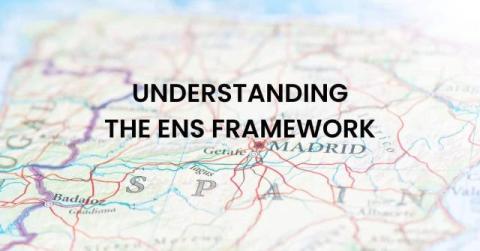
Understanding the ENS Framework: A Guide to Spain's National Security Framework
As governments continue to digitize services, the number of systems that support public administration continues to grow. With this expansion comes greater cybersecurity risk. To address these risks, Spain established the Esquema Nacional de Seguridad (ENS), a national framework designed to protect information systems used by public sector organizations. ENS defines the security requirements that ensure government systems remain secure, reliable, and resilient.