Intro to Cyberhaven
Introducing a better way to protect data from insider threats and exposure. Cyberhaven protects important data other tools can’t see, from threats they can’t detect, across exfiltration vectors they can’t control.


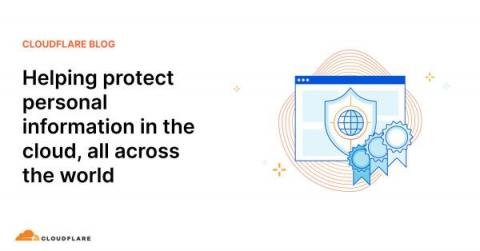
Cloudflare has achieved a new EU Cloud Code of Conduct privacy validation, demonstrating GDPR compliance to strengthen trust in cloud services.
Today, Netskope partnered with the Cloud Security Alliance to release the Data Loss Prevention (DLP) and Data Security Survey Report, a survey focused on data protection needs in cloud and hybrid work environments. Unsurprisingly, the report found that the biggest pain point organizations identify with trying to modernize their data protection strategy is that current DLP deployments show limitations when it comes to cloud and remote work use cases, and they are a nightmare to manage.
Imagine doing business in a bubble. You are an international company only allowed to make decisions using data collected within your country and by your business unit (BU). You also cannot share data with subsidiaries or third parties. It would be challenging to conduct day-to-day business, let alone innovate and grow. Fortunately, this isn’t the state of business today. Organizations transfer trillions of data points across borders daily.
Kubernetes is an open-source container orchestration tool originally developed by Google for managing microservices or containerized applications across a distributed cluster of nodes. It is widely thought that “Kubernetes is key” to cloud-native application strategies. Kubernetes (K8s) runs over several nodes, and the collection of nodes is called a cluster. K8s clusters allow application developers to orchestrate and monitor containers across multiple physical, virtual, or cloud servers.
As the name implies, dynamic data masking actually masks data. Just as protective masks have obscured people’s smiles (and frowns) during the pandemic, this data-protection method covers sensitive data. People who shouldn’t see the data won’t see it.
Tokenization hides data. Sometimes data must be hidden in order to satisfy compliance requirements and customers’ expectations for data privacy. A form of data protection, tokenization conceals sensitive data elements so should an organization’s data be breached, the visible tokenized data—essentially a replacement for the valuable data—means nothing.A hacker will only see characters that are meaningless.
Spelling, let alone pronouncing, “anonymization” and “pseudonymization” is just the beginning. Vocabulary, however, will be the least of the challenges for organizations that ignore the business value created through the use of these data protection methods. Anonymization and pseudonymization are two ways to de-identify sensitive data, and each has a distinct purpose in the tightrope balance between fully using and fully protecting data and data privacy.