Signs of Phishing: Protecting Yourself During the Holidays

I recently wrote about phishing around the holidays and while I was working on the piece, I noticed a couple of friends posting recent emails on Facebook. I thought it might be fun to dig a bit deeper into those emails and look at the telltale signs that indicate these are phishing attempts.
Is Your Company Suffering from Supplier Stockholm Syndrome?

That phrase came to me many years ago when working on a multi-million pound IT outsourcing deal. We were up to our necks in the finer points of platform-wide and stack-deep security, and I realised we were fighting amongst ourselves more than challenging the final competing vendors. This infighting was partly due to the large amount of IT staff in the room likely to transfer to the winning team and partly due to the view of security controls as a bolt-on extra.

60% of Canadians Fear Falling Victim to Fraud this Holiday Season, Scotiabank Survey Reveals

How likely is it to fall victim to fraud? As far as I’m aware, I personally have not purchased from a fraudulent site, but I have had my card details stolen in the past. Additionally, I remember years ago that while attempting to find a flat, I found a ‘rental company’ who turned out to be one person attempting to rent out flat 13 that due to superstition didn’t actually exist.

5 Ways to Detect Malicious Activity & Protect Your Kubernetes Workloads

Organizations are rapidly moving more and more mission-critical applications to Kubernetes and the cloud to reduce costs, achieve faster deployment times, and improve operational efficiencies. But security teams struggle to achieve a strong security posture with Kubernetes and cloud-based resources because of the inability to apply conventional security practices in the cloud environment.

Top Cloud Security Resources: Certifications, Events and Social Media

Context setting: In my first article on cloud security, I talked about the journey to cloud migration. What are the things you need to consider when planning the big move? To realize the full value of this post, you must have already identified the motivations for migration and the locations of some resources you can use to enhance your security posture within yourself and/or your team.

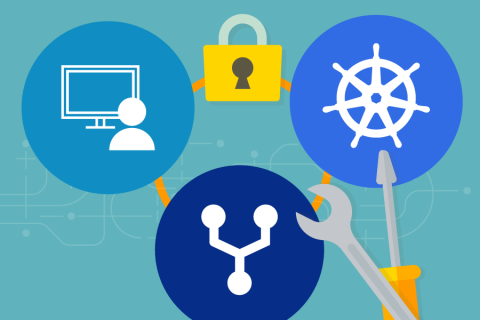
Enforcing Network Security Policies with GitOps - Part 1

“How do I enable GitOps for my network security policies?” This is a common question we hear from security teams. Getting started with Kubernetes is relatively simple, but moving production workloads to Kubernetes requires alignment from all stakeholders – developers, platform engineering, network engineering, and security. Most security teams already have a high-level security blueprint for their data centers.

Redscan shortlisted as a finalist at FStech Awards 2020

We’re pleased to announce that Redscan has been named a finalist at the FStech Awards 2020. The FStech Awards celebrate technology excellence and innovation within the UK and EMEA financial services sectors. ThreatDetect™, our Managed Detection and Response Service, has been shortlisted in the Cyber Security Solution of the Year category.

Plights of the Round Table - A Tale of Weighing Risk

In an ornate boardroom, a group of executives gathered at a large round table for their annual strategic planning meeting. Morgan, the CEO, was surrounded by Lana, the VP of Sales; Susan, the CISO, Smith, the COO; and Barbara, Chief Compliance Officer. There was much to get done in the next twelve months, so they were passionately debating how best to invest their limited budget to achieve their goals and to address various sources of risk.

Looking to Drive down the Cost of Doing Business? Use Managed Services

Businesses are always looking for ways to control and reduce the cost of doing business as well as gain a competitive advantage over their respective competitors. The constant pressure of doing more with less has introduced many offerings designed to reduce the cost and complexity of the IT/OT infrastructures that support the business. Let’s take a look at some offerings that have been introduced to address these challenges.

What are Indicators of Compromise (IOCs)?

Indicators of compromise (IOCs) are pieces of forensic data, such as system log entries, system files or network traffic that identify potentially malicious activity on a system or network. Digital forensics security analysts and information security professionals use indicators of compromise to detect data breaches, malware infections and other security incidents.