Ransomware Attack Dwell Time Drops by 77% to Under 24 Hours

As attackers evolve their toolsets and processes, the significant drop in dwell time signifies a much higher risk to organizations that now have less time to detect and respond to initial attacks. This is bad news. Two years ago, the median dwell time – the time between gaining access to a network and executing the ransomware – was 5.5 days. Last year it was 4.5 days.

One Out of Five Organizations Must Improve Their Security Posture to be Eligible for Cyber Insurance

As insurers become more educated on what a “secure organization” looks like, they are tightening their requirements that puts the onus on organizations to be more secure. According to Netwrix’ 2023 Hybrid Security Trends Report, 59% of organizations either have a cyber insurance policy in place or plan to purchase one within 12 months. Cyber insurers have spent the last few years learning what they don’t know about this new market.

Healthcare Industry Witnesses 279% Increase in Business Email Compromise Attacks in 2023

The massive uptick in business email compromise (BEC) is considered one of the costliest attack types, requiring organizations to put employees on notice to stay vigilant. The latest research from the FBI puts the average cost of BEC attacks at around $125,000. What makes them so dangerous is that they largely rely on text-only emails using social engineering to trick those with finance responsibilities into parting with the money they control.

Cybersecurity Awareness Month: School habits to protect you and your family

Back to school is a great time to remember basic cybersecurity best practices to protect you and your family. These won’t surprise anyone who’s been parenting for the last few years, but what might surprise you is how fast things are changing, which can increase your risk of giving access to cyber criminals. That is mostly around all the applications, and even micro-applications, that most frequently provide the lowest levels of security.

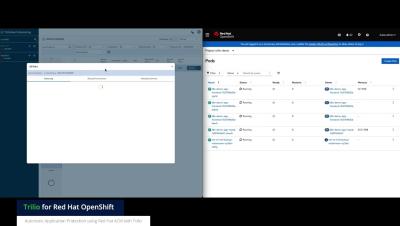
Automatic Application Protection using Red Hat Advanced Cluster Management with Trilio (with Audio)

(With Audio) See how easy it is to protect a newly deployed application into OpenShift using Red Hat Ansible Automation Platform, followed by an ACM Policy written for Trilio that will auto protect the deployed application (create a backup, according to the policy) In this video we will show you an example of using Red Hat Advanced Cluster Management (or ACM) and Trilio to automatically back up an application that has just been deployed.

Benefits of conducting a Penetration Test in your Microsoft Environment

Penetration testing is a pivotal strategy amongst various security methodologies, aimed at bolstering an organisation’s digital environment. Commonly known as “pen testing” or “ethical hacking”, this type of test represents a structured and regulated method for assessing the security integrity of a company’s digital ecosystem.

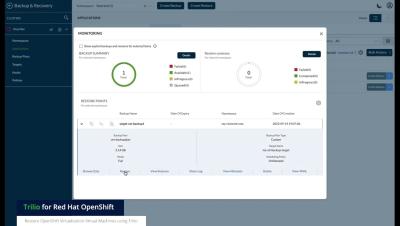
Restore your OpenShift Virtualization VMs with Trilio (With Audio)

Use the Trilio UI to Restore your OpenShift Virtualization Virtual Machines. In this video we will show you how to restore a previously backed up virtual machine running in OpenShift using Trilio As we are restoring a virtual machine to the same cluster that we backed up earlier, we can use the Trilio User Interface to simply list the deployed virtual machines, and see that the status of the last backup is marked as Available for this virtual machine.

SAS and Snyk discuss the future of AI for development and security teams

Composing song lyrics, writing code, securing networks — sometimes it seems like AI can do it all. And with the rise of LLM-based engines like ChatGPT and Google Bard, what once seemed like science fiction is now accessible to anyone with an internet connection. These AI advancements are top-of-mind for most businesses and bring up a lot of questions.

Building a Cyber-Resilient Future Together

Last week in New York, I had the opportunity to attend a panel discussion hosted by SINET and moderated by Upendra Mardikar, the Chief Information Security Officer of TIAA. We discussed everything from security in DevOps, to AI’s pros and cons, and cybersecurity’s future. As long as the attack surface, API usage, and digital footprints increase, so will cyber risk.