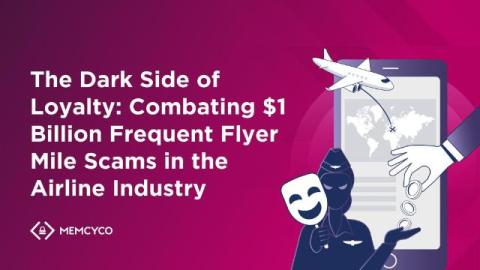
The Dark Side of Loyalty: Combating $1 Billion Frequent Flyer Mile Scams in the Airline Industry

Frequent flyer programs have long been a symbol of loyalty and reward in the airline industry. These programs are intended to reward travelers with benefits and encourage ongoing customer relationships. However, a growing and pervasive threat is lurking beneath the allure of free miles and exclusive perks: Frequent Flyer Miles fraud. At the last credible count in 2018, there were over 30 trillion unspent miles in circulation, according to McKinsey.

Cyberbiosecurity: Where Digital Threats Meet Biological Systems

Cyberbiosecurity has emerged as an essential area of interest as the boundaries between the digital and biological sectors continue to blur. With rapid advancements in areas such as artificial intelligence, automation, and synthetic biology, the need for strong cyberbiosecurity protections has grown to safeguard the bioeconomy. As biotechnology evolves, it creates a complex landscape where breaches can have consequences far beyond typical cyber risks.

Identity Fraud and the Cost of Living Crisis: New Challenges for 2024

Fraud is a rampant threat to individuals and organizations worldwide and across all sectors. In order to protect against the dangers of fraud in its many forms, it is vital to stay in the loop on the latest fraud trends and the threat landscape. The Fraudscape 2024 report from Cifas, the UK’s Fraud Prevention Community, is an effort to share this information to help prevent fraud.

How Healthcare Companies Can Share Data Safely for Offshore Testing and Development

Data sharing for offshore testing, development, and other operational needs is often essential in the healthcare industry. Yet, laws governing Protected Health Information (PHI) make this challenging, as sending sensitive data outside the U.S. can introduce significant regulatory risks. To stay compliant, healthcare companies need solutions that can anonymize data without compromising its usability or accuracy.

UpGuard Summit May 2024 Recap: Automated TPRM

The second UpGuard Summit of 2024 kicked off at the end of May, welcoming security professionals from APAC, EMEA, India, and the U.S. to discuss key developments and strategies across the cybersecurity industry. This quarter’s event focused on third-party risk management (TPRM), specifically how security teams can use automation to eliminate manual work and streamline critical TPRM workflows and processes.

CARBANAK (aka ANUNAK) Distributed via IDATLOADER (aka HIJACKLOADER)

IDATLOADER (aka HIJACKLOADER, GHOSTPULSE) has become prevalent in 2024, using advanced and new techniques such as BPL Sideloading, which Kroll reported on in June. Kroll observes IDATLOADER distributing malware such as ASYNCRAT, PURESTEALER, REMCOS, STEALC and what some might describe as a recent epidemic in LUMMASTEALER infections.

Nauzer Gotla Lightning Interview

Welcome to the first installment of Riscosity’s Lightning Interview Series. We'll be sitting down with industry leaders for informative and to-the-point conversations. In this episode, we chat about the present and future of internal audit and data security with Nauzer Gotla, Vice President of Internal Audit at Nextracker (NASDAQ:NXT), a dominant player in solar tracking solutions with revenues north of $2.5B.

Trustwave Recognized in Two Asia Pacific IDC MarketScapes for Security Services

Trustwave has been named a Leader in the IDC MarketScape: Asia/Pacific (APAC) Managed Security Services (MSS) 2024 Vendor Assessment (IDC, September 2024) and a Major Player in the IDC MarketScape: Asia/Pacific Professional Security Services 2024 Vendor Assessment (IDC, September 2024). "Trustwave is proud to be recognized as a Leader and a Major Player respectively by the IDC MarketScape in MSS and PSS across APAC", said Trustwave CEO Eric Harmon.

Top Strategies to Protect Your Website from Subdomain Takeovers

Subdomain takeovers pose a significant and often overlooked threat to website security. In today's digital age, almost every business has a website to promote, inform, and provide resources to visitors. Websites that use multiple subdomains risk exposing themselves to cyberattacks. Subdomain takeovers can lead to data breaches and reputational damage. However, these risks can be minimized with the right strategies, and your organization can stay protected.