Security | Threat Detection | Cyberattacks | DevSecOps | Compliance

How to Convert Word to PowerPoint in AI Word Editor (with Perfect Formatting)

You've completed your lesson plan in WPS Writer, polished your report, or finished your proposal. The next stage, however, is to create a visual presentation from that elegant, content-rich document. Is every slide being duplicated? Thank you, but not. Thankfully, WPS Office preserves formatting, structure, and even graphics when converting a free Word document to a PowerPoint file.

Debunking API Security Myths

I recently sat down with Tejpal Garwhal, Application Security and DevSecOps Leader, for a conversation debunking some of the most common API security myths. From zombie endpoints to the limits of WAFS and gateways, we covered what’s really happening on the ground; and what security teams need to do differently. Here’s a quick rundown of the key takeaways, but for the full picture, watch the full webinar.

CISO Spotlight: Andrew Storms on Trust, AI, and Why CISOs Need to Be Optimists

Andrew Storms, VP of Security at Replicated, has spent three decades on the frontlines of cybersecurity. From building Unix systems in the early ‘90s to leading incident response and AI security strategies today, he has seen the CISO role evolve from back-office function to boardroom mainstay. In this spotlight, he shares the lessons that shaped his thinking, why storytelling is a critical CISO skill, and how API security is no longer optional.

Fail-Open Architecture for Secure Inline Protection on Azure

Every inline deployment introduces a tradeoff: enhanced inspection versus increased risk of downtime. Inline protection is important, especially for APIs, which are now the most targeted attack surface, but so is consistent uptime and performance. This is where a fail-open architecture comes in.

Beyond The Click: Unveiling Fake CAPTCHA Campaigns

Social engineering attacks continue to be among the most effective methods for delivering malware and compromising systems. Among these, a concerning trend has emerged and rapidly gained traction: "ClickFix" and "FakeCAPTCHA" campaigns. These sophisticated attacks exploit users' familiarity with everyday verification systems while leveraging clipboard manipulation techniques to deliver malicious payloads—all without exploiting a single technical vulnerability.

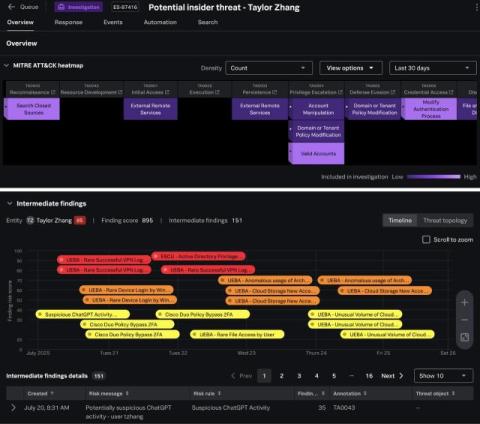
Identity Based Attacks: Why You Need Behavioral Detection in XDR

You’ve likely invested in traditional security tools that monitor failed logins or privilege requests—but more advanced threats use legitimate credentials to hide. If attackers bypass authentication protocols or hijack stolen tokens, they can roam freely under the radar. That’s why behavioral detection in an XDR solution is crucial. It does not just look at logs — it looks at patterns.

Fireside Chat: Breaking Free from Legacy DLP

There’s a silent frustration building inside security teams today. It’s the fatigue of defending critical data with tools that can’t keep up. The friction of investigating endless false positives. The anxiety of not knowing what sensitive data is actually doing across your environment. And the sinking realization that despite massive investments, DLP tools are failing at the one thing they were designed to do–prevent data loss.

How AI is Redefining SOC Architecture

If you’ve been in cybersecurity longer than five minutes, you know one thing: legacy SOC architecture isn’t just showing its age — it’s creaking under the weight of today’s threats. Cybersecurity analyst Francis Odum nailed it when presenting at Torq’s SKO 2025: “Legacy SOAR assumed everything starts in the SIEM. Now, teams connect automation directly to EDR, email, and identity systems.”.

Understanding the CISO: Role, skills, and security impact

In the face of increasingly sophisticated cyber threats, the chief information security officer, or CISO, is responsible for ensuring the organization's data is secure. CISOs ensure that proper security strategies, policies, and technologies are working to meet their goals of mitigating risk, maintaining regulatory compliance, and upholding customer trust. A CISO helps align security initiatives with business goals, enabling growth while minimizing disruptions and vulnerabilities.