Security | Threat Detection | Cyberattacks | DevSecOps | Compliance

The Zero-Trust Audit: Protecting Financial Intelligence in the Cloud

Digital finance is shifting away from the old way of securing data. The old method relied on a strong perimeter to keep threats out. Once someone was inside the network, they often had free rein to move around. Cloud systems make that perimeter vanish because data moves between different apps and users constantly.

Featured Post

Bridging the Cyber Confidence Gap: A Board-Level Imperative for UK Organisations

Self-assurance and confidence is an essential and hard-earned skill for business leaders. Boards are expected to provide clarity during volatility and reassurance during disruption. However, cyber security presents a challenge: technology evolves continuously, threat actors adapt at speed and regulatory scrutiny continues to intensify. Within this environment, many organisations express belief in their cyber resilience, even as the underlying systems and risks evolve beneath them. In this context, confidence rooted in assumption can diverge quickly from assurance grounded in operational evidence.

Exposed LLM Infrastructure: How Attackers Find and Exploit Misconfigured AI Deployments

Someone is scanning your LLM infrastructure right now. They are not waiting for you to finish your security review. Between October 2025 and January 2026, GreyNoise’s honeypot infrastructure captured 91,403 attack sessions targeting exposed LLM endpoints. These were two distinct campaigns systematically mapping the expanding attack surface of misconfigured AI deployments. Your team is moving fast on AI. LLM servers are going live, inference APIs are being connected, MCP endpoints are being spun up.

CVE-2026-34197: Apache ActiveMQ Jolokia RCE Vulnerability

Apache ActiveMQ Classic, widely used as a messaging backbone in enterprise environments, carries a high-severity vulnerability tracked as CVE-2026-34197. What makes this particularly alarming is its roots. The underlying behavior enabling this vulnerability has existed for nearly 13 years, silently present across countless enterprise deployments.

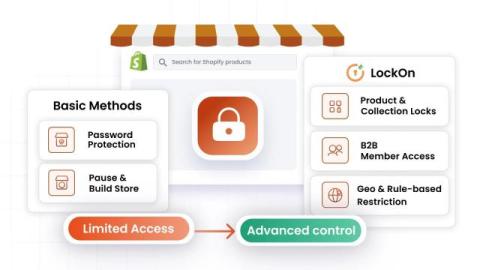
How to Lock Your Shopify Store (Password Protect + Advanced Lock Options)

In Shopify, “locking” your store doesn’t refer to a single built-in function. It can mean different things depending on your objective. For some merchants, it’s as simple as password-protecting the entire storefront during maintenance or pre-launch phases. For others, it involves restricting access to specific products, collections, or pages, especially in B2B or wholesale scenarios where pricing and inventory should only be visible to approved customers.

Why MFA is the Foundation of VPN Security

VPNs have long been considered the backbone of secure remote access, especially as organizations shifted to distributed work environments. By encrypting data in transit, they create a secure tunnel between users and corporate systems. On the surface, this appears sufficient to protect sensitive business operations and internal resources. However, encryption alone does not guarantee security. VPNs do not verify who is accessing the network, only that the connection is valid.

FedRAMP Leveraged vs Agency ATO Authorization Paths

FedRAMP is the information security framework used by the United States government, and it’s required for any cloud service provider hoping to work with the government in a way that handles sensitive information. If you’re a cloud service provider and you want to become FedRAMP-authorized, how do you do it? Unfortunately, this is a more difficult question to answer than a lot of people wish.

Why API Discovery Is the First Step to Securing AI

AI risk doesn’t live in the model. It lives in the APIs behind it. Every AI interaction triggers a chain of API calls across your environment. Many of those APIs aren’t documented or tracked. That’s your real exposure. Shadow API discovery gives you visibility into those hidden endpoints, so you can find them before attackers do. If you don’t know which APIs your AI relies on, you can’t secure the system.

Explainable AI in Email Security: From Black Box to Clarity

Generative AI and sophisticated social engineering have reshaped the cybersecurity landscape in 2026. Traditional "castle-and-moat" defenses centered on the Secure Email Gateway (SEG) are increasingly pressured by machine-scale attacks designed to bypass static filters. As organizations shift toward Integrated Cloud Email Security (ICES) models, a new technical and psychological barrier appears: the "black box" problem of defensive AI.

Why QR Code Phishing Is the New 2026 Security Blind Spot

QR code phishing is a social engineering attack that embeds malicious URLs inside QR code images delivered through email. Because the payload lives inside an image — not in a clickable link or plain text — legacy secure email gateways (SEGs) never see it. The email passes inspection. The user scans the code with their phone. And the attack moves from a protected corporate desktop to an unmanaged mobile device outside your security perimeter.