Security | Threat Detection | Cyberattacks | DevSecOps | Compliance

Protecting a New Vulnerable Population on the Internet

Abraham Lincoln is credited with saying that “A lawyer’s time and advice are his stock and trade.” Whether the quote is mis-attributed to Lincoln is irrelevant to the greater message, which is that attorneys are “knowledge workers.” To state it as bluntly as one attorney once explained to an executive where I worked, “My knowledge will keep you out of jail.” As a cybersecurity professional, you too are a knowledge worker.


Securing Computerized Vehicles from Potential Cybersecurity Threats

Like technology itself, cybersecurity is ever-evolving and encompassing more areas of our lives, including transportation. Popular science fiction movies have led us to expect flying taxis and private space travel as the future of transportation. If that is going to become an eventual reality, the first steps towards that future are “smart cars” and automated vehicles. Electric vehicles are expected to account for 58% of global passenger vehicle sales by 2040.

What is Enterprise Digital Rights Management (EDRM)?

EDRM sometimes referred to as Information Rights Management (IRM) is a core-data-centric technology that offers uninterrupted protection to unstructured data. It protects sensitive information/data everywhere by managing and enforcing access and usage rights to the information throughout its lifecycle, no matter where the information is distributed. EDRM controls how employees and partners use sensitive information.

SentinelOne Advanced AlienApp

In today’s threat landscape there is no escape from having a 360° view to protect crucial organization assets. The criticality of the matter is greatly amplified in these times where working remotely has become vastly common among Enterprises and SMBs alike. An ideal security solution would combine threat detection & response on cloud resources as well as on the endpoint level, providing extensive, real-time and impactful coverage customers desperately need.

Digital transformation explained

No matter what sector your organization does business in, you’ve probably heard the term digital transformation. In every industry, digital transformation is going to be critical to remain competitive and resilient. But what does digital transformation mean? And how does cybersecurity fit in? Today’s organizations are facing an increasingly complex environment of securing everything attached to the network; applications, data, and endpoints.

Resolve network security issues efficiently with the Firewall Analyzer-ServiceDesk Plus integration

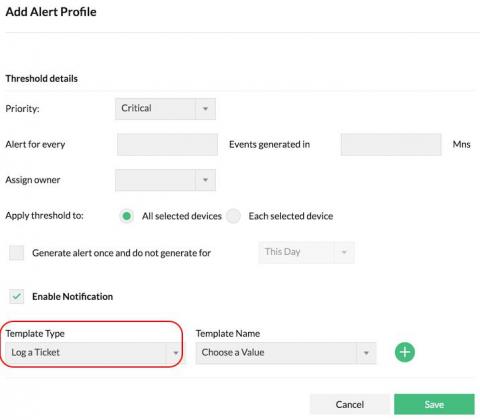
ManageEngine Firewall Analyzer reviews firewall logs to capture network security threats. It generates alerts upon detecting security threats and attacks, and notifies you, the security administrator, in real time. You can configure alerts to be sent via email, SMS, and more. With these real-time notifications, you can troubleshoot to take instant remedial action. You can also make changes to your firewall policies and configurations to prevent recurring security incidents.

The top 10 network security vulnerabilities for businesses in 2021

As per UK DCMS’s data breaches survey, about 32% of businesses in the UK have faced a form of cybersecurity threat between 2018 and 2019. As a result of these network security vulnerabilities, these businesses incurred costs on lost data and many other damages that totalled £4,180.

Ransomware and Energy and Utilities

The exponential growth of IoT devices in the energy and utilities industry has greatly increased focus on cybersecurity. Focus on cybersecurity across industries has increased recently, no doubt due to factors like COVID-19 forcing a jump in remote work. In 2020, we saw cybersecurity move from being a technical problem to a business issue.

Docker Vs. Kubernetes: A Detailed Comparison

The Docker vs. Kubernetes debate is common in the containerization world. Although most people like comparing Kubernetes and Docker, the two technologies are not exchangeable—you cannot choose one over the other. They are essentially discrete technologies that can perfectly complement each other when creating, delivering, and scaling containerized applications. In fact, the best at par comparison would be Docker Swarm vs. Kubernetes, which we’ll talk about later.