Security | Threat Detection | Cyberattacks | DevSecOps | Compliance

The Truth About Server Rentals!

Imagine you have just bought a brand-new Ferrari. It is sleek, ridiculously fast, and smells like success. Now imagine trying to squeeze that engineering masterpiece into a cramped, shared communal garage with fifty neighbors who park their broken minivans inches from your doors, leave open paint cans lying around, and occasionally block the exit for hours. Sounds completely insane, right? Yet every single day, thousands of smart, growing businesses make this exact mistake with their digital infrastructure.
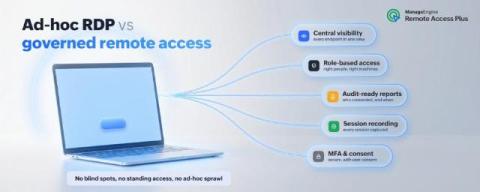
Why unmanaged RDP is risky at enterprise scale (and how to regain control)

Remote Desktop Protocol (RDP) is the path of least resistance for gaining access to another Windows machine. It is built into the OS, it is free, and almost every admin and help desk technician already knows how to fire up mstsc.exe and type in a hostname-as simple as that. That convenience is exactly why RDP is everywhere inside corporate networks.

Closing the Gap: What Actually Turns Agent Telemetry Into Evidence

‍ An AI coding agent's own telemetry answers real questions well: which agents are running, what they invoked, the shape of a session, whether a run looks abnormal. It cannot, no matter how completely it is instrumented, stand alone as evidence. The agent under review is also the party writing the record. The record shows an attempt, not an outcome. And the vocabulary for describing any of it is still being written in public, one unstable commit at a time.

ASM Has a Silent C, and It Stands for Change Management

If you run a security team, a large part of the job is responding to change. Something in the environment moves, and you have to work out whether risk moved with it, and how quickly you need to act. Those changes arrive from two different directions, external and internal. Of course, we’re all familiar with the external ones. A new CVE drops, a proof of concept goes public, a ransomware group starts naming your sector. The internal ones start inside your own organization.

Pikabot Malware: Delivery Methods, Evasion, and Impact

Originating in early 2023, Pikabot emerged as a significant malware loader. Over the past year, ThreatLabz has diligently monitored its development and operational methods. Notably, there was a surge in Pikabot’s usage in the latter part of 2023, attributed to a BlackBasta ransomware affiliate adopting Pikabot post the FBI-led Qakbot takedown. However, Pikabot’s activity ceased shortly after Christmas 2023, with version 1.1.19 marking its endpoint.

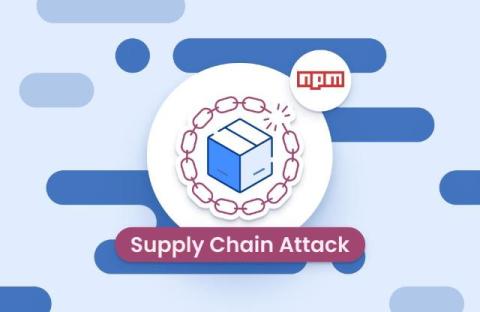
Mini Shai-Hulud hits openapi-react-query-codegen: 10 malicious npm versions

On August 28, 2026, ten malicious versions of @7nohe/openapi-react-query-codegen were published to npm between 20:00 and 20:21 UTC. The package generates React Query hooks from an OpenAPI schema and draws roughly 150,000 weekly downloads. The latest tag pointed at the malicious 3.0.4 for the duration of the window. Eight of the ten releases carry a multi-stage loader that reaches for cloud, registry, and developer credentials. The attacker needed no stolen npm token and no hijacked maintainer account.

How to Do Prompt Injection Testing on an Agent in Under Ten Tests

A prompt injection test suite can only report on the payloads it contains. That sentence is the whole problem with the number most teams have. Somewhere in a ticket there is a scan result: a scanner threw several hundred probes at the endpoint and a percentage got through. The percentage is real.

Prompt Injection CWE: The ID Exists and EchoLeak Never Used It

Prompt injection has a CWE, and the two incidents everyone cites were not filed under it. That is not a clerical detail. A CWE ID is a claim about root cause, and every entry carries a mitigation table that follows from the root cause it names. When a record says CWE-1427, it is saying the product failed to neutralise input before building a prompt, and it is implying that neutralising the input is the fix.

1Password signs OpenAI open letter calling for collective action on cyber defense

OpenAI’s open letter on collective cyber defense warns that defenders have a limited window to strengthen security. It urges organizations to fix their highest-risk weaknesses, build least privilege and strong access controls, verify fixes, and make agentic identities traceable and accountable.