Security | Threat Detection | Cyberattacks | DevSecOps | Compliance

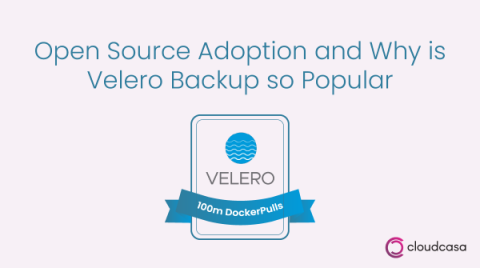
Open Source Adoption and Why is Velero Backup so Popular

In the cloud native world, open source solutions are popular and widely used. Velero, an open source software, is quickly becoming a standard for Kubernetes backup and has been pulled over 100M times from Docker Hub! It is the most popular choice amongst Kubernetes community for backup and recovery. In a recent episode of TFiR, Swapnil Bhartiya sits down with Sathya Sankaran, Chief Operating Officer at CloudCasa by Catalogic, to talk about the power and potential of open source ecosystem.

Reasons to Stick with Open Source Velero for your Kubernetes Backup and Recovery

I recently had a chance to speak with Chris Mellor at Block and Files about the emergence of Velero as the standard for Kubernetes data protection. I shared some ballpark estimates of market share across open source and commercial vendors to make my case. These numbers were obtained through diligent market research. They are estimates, but they are not imaginary.

How Namespace-as-a-Service Enables Self-Service Kubernetes Recovery

Kubernetes has become the de facto standard for container orchestration and management, providing a powerful platform for deploying and managing containerized applications. One of the key benefits of Kubernetes is its support for namespaces, which allow users to isolate groups of resources within a cluster, providing a level of isolation and resource allocation for different applications or teams.

Comparing Restic vs Kopia for Kubernetes Data Movement

When we began developing CloudCasa, a Software as a Service (SaaS) platform, for protecting Kubernetes applications, we looked at the data protection landscape and focused on areas that we could improve upon and give back to the user community. We wanted to provide them with a quick and efficient way in which they could start protecting this infrastructure with minimal effort, overhead, and most importantly minimal cost.

New Service Offering to Manage and Run Velero Backups at Enterprise Scale

It’s spring again, and as the weather warms, the birds sing, and the flowers bloom, our thoughts here at Catalogic have turned to yet another major CloudCasa feature update! Our engineering team has (as they like to frequently point out) exceeded all reasonable expectations once again by delivering a veritable cornucopia of new features.

Schedule and Automate Postgres Backups on Kubernetes

Postgres, also known as PostgreSQL, is a powerful open-source relational database that has been around for over 30 years. It has a strong reputation for reliability, scalability, and performance, which is why it is used by a wide range of organizations, from small businesses to large enterprises, across various industries. Whether you need to store and retrieve large amounts of data, run complex queries, or support business-critical applications, Postgres can handle it all.

Getting to Know Velero Backup and Important Velero Resources That You Can Utilise

Velero is an open source tool for backing up and restoring resources in a Kubernetes cluster, performing disaster recovery, and migrating resources and persistent volumes to another Kubernetes cluster. Velero backup helps many organizations protect data stored in persistent volumes and makes your entire Kubernetes cluster more resilient. Velero has been pulled over 50M times from DockerHub! It is the most popular data protection choice for the Kubernetes community.

How To Setup Velero Backups On EKS Using IAM Roles for Service Accounts (IRSA)

Velero is an open-source tool that allows you to backup and restore your Kubernetes cluster resources and persistent volumes. Velero backups support a number of different storage providers including AWS S3. The process of setting up Velero backup with S3 using AWS credentials has been documented by Velero here. However, at the time of this post, there is no official documentation on how to set up Velero using IRSA or IAM Roles for Service Accounts.

Schedule and Automate MongoDB Backup and Restore on Your Kubernetes Cluster

In this blog we will guide you step by step through using CloudCasa to backup and restore NoSQL databases such as MongoDB operating in your Kubernetes environment. Before we begin, let’s have some basic understanding of the database under test. NoSQL databases provide a variety of benefits including flexible data models, horizontal scaling, lightning-fast queries, and ease of use for developers.

CloudCasa and Ondat Bring Best-of-Breed Bundled Offering for Stateful Applications

CloudCasa by Catalogic and Ondat have joined forces to offer customers a combined solution stack to run and manage stateful applications on Kubernetes and provide best-of-breed performance, availability, data protection and recovery. In this episode of TFiR: Let’s Talk, Swapnil Bhartiya sits down with the executives of both companies, CloudCasa COO Sathya Sankaran and Ondat CEO Richard Olver, to talk about their partnership.