Security | Threat Detection | Cyberattacks | DevSecOps | Compliance

How Integrating Jira and GitHub in Slack Enhances DevOps Efficiency?

As with any other rapidly developing field, effective communication and proper coordination within DevOps environments are critically important elements of successful work and necessary conditions for providing customers with high-quality software as soon as possible. 66% of DevOps users state that high-quality software is released quicker than before.
How to Implement a Security-as-Code Approach

Did you know that in 2023, the average data breach cost companies a whopping $4.45 million? Ouch! And with development cycles spinning faster than a hyper-caffeinated hamster, those risks are only multiplying. So how do you keep security from becoming a costly afterthought in this high-speed race? Enter Security as Code (SaC) – your secret weapon for weaving security into the very fabric of your development process.

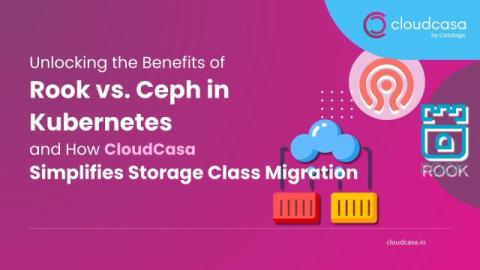
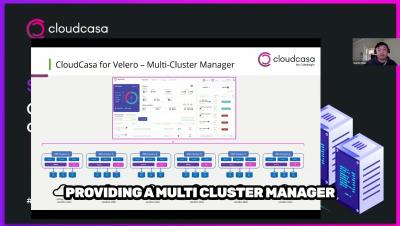
Unlocking the Benefits of Rook vs. Ceph in Kubernetes and How CloudCasa Simplifies Storage Class Migration

Ask Our Experts In the rapidly evolving world of Kubernetes, managing storage efficiently can be a challenging task. As more organizations adopt Kubernetes for their cloud-native applications, the need for scalable, resilient, and automated storage solutions becomes critical. This is where Rook and Ceph come into play, offering powerful storage capabilities tailored for Kubernetes environments.

Quick Guide to GNOME Display Manager (GDM)

The GNOME Display Manager (GDM) is a program that facilitates graphical user login for Linux systems using GNOME, running and managing the X.Org display servers for both local and remote logins. The GNOME Display Manager (GDM) is the login graphical user interface (GUI) and manager for the GNOME desktop environment within Linux. GDM runs in the background and is a replacement for X Display Manager (XDM), handling user authentication, and initiating desktop sessions.