Security | Threat Detection | Cyberattacks | DevSecOps | Compliance

Unified threat detection for AWS cloud and containers

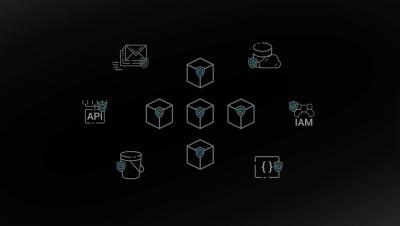
Implementing effective threat detection for AWS requires visibility into all of your cloud services and containers. An application is composed of a number of elements: hosts, virtual machines, containers, clusters, stored information, and input/output data streams. When you add configuration and user management to the mix, it’s clear that there is a lot to secure!
Getting started with cloud security

Your application runs on containers and talks to multiple cloud services. How can you continuously secure all of it? With Sysdig you can. Continuously flag cloud misconfigurations before the bad guys get in. And suspicious activity, like unusual logins from leaked credentials. All in a single console that makes it easier to validate your cloud security posture. It only takes a few minutes to get started.

Preventing Recent Microsoft Exchange Vulnerabilities and Similar Attacks Using Netskope Private Access

On March 2, Microsoft released patches to address four zero-day vulnerabilities in Microsoft Exchange Server software. Those vulnerabilities, known collectively as ProxyLogon, affect on-premises Exchange Server 2013, Exchange Server 2016, and Exchange Server 2019. (Exchange Online, which is part of Microsoft 365, has not been affected.)

Cloud SIEM: Modernize Security Operations and your Cyber Defense

Scott Crawford, Research Director of Information Security at 451 Research, a part of S&P Global Market Intelligence, joined by Greg Market, Vice President and General Manager of Security at Sumo Logic, discuss the increased adoption of cloud as a deployment model for SIEM. Cloud SIEM and various forms of deployment has become a significant factor for enterprises according to survey-based research at 451 Research.

Cloud Threats Memo: Keeping Sensitive Data Safe From Personal Instances

Cloud-native threats have multiple implications. We are used to seeing legitimate cloud applications exploited within sophisticated kill chains, and we forget the basics: such as the risks posed by Shadow IT, like when personal email accounts are used to improperly handle corporate data. This is a very real risk right now, when users are working almost completely from home and the line between the professional and personal use of work devices is blurred.

Analytics-Based Investigation and Automated Response with AWS + Splunk Security Solutions

Organizations are migrating an increasing amount of their infrastructure into the cloud. The cloud provides organizations with a number of benefits like greater scalability, improved reliability and faster time to value. However, these potential benefits can be offset if security is an afterthought.