Security | Threat Detection | Cyberattacks | DevSecOps | Compliance

Powering Wider Global DLP Coverage with Three New Detectors from Nightfall

‍A DLP solution is only as strong as what it can detect. Gaps in detector coverage aren't just a technical inconvenience; they're exposure windows. Every format that goes unrecognized is a policy that can't fire, a remediation that can't happen, and a breach waiting to occur. Three new detectors are now available in Nightfall: personal photos (selfies and headshots), Malaysian Driver's License numbers, and South African National ID numbers.

What is data loss prevention (DLP)?

Quick definition: Data loss prevention (DLP), also known as data leakage prevention or data loss protection, is a set of technologies and policies that stop sensitive corporate data from leaving the organisation due to user negligence, data mishandling, or malicious intent. DLP solutions enforce data handling rules by allowing or blocking data access and transfer operations based on predefined security policies.

Why DLP alone can't protect Manufacturing IP (and what can)

DLP and Secude solutions work together to protect your IP data from creation to deletion - no matter where it travels. Here’s how. Engineering simulations. Machinery instructions. Prototype designs. CAD software is essential across the modern manufacturing production chain and contains manufacturers’ most confidential intellectual property (IP). Yet, much of the manufacturing industry still relies on Data Loss Prevention (DLP) tools to protect its CAD data.

Falcon Data Security Secures Data Wherever It Lives and Moves

In modern organizations, sensitive data lives everywhere and is constantly moving. It is created, accessed, transformed, and shared across endpoints, browsers, SaaS applications, cloud services, GenAI tools, and agentic workflows. CrowdStrike is introducing CrowdStrike Falcon Data Security to protect data across constantly evolving business environments.

Beyond Firewalls: Why User Behavior Data Is Becoming Essential to Modern Security

For decades, cybersecurity has been defined by barriers. Firewalls, antivirus software, encryption protocols, each designed to keep threats out and systems protected. These tools remain essential, but the nature of digital risk has changed. Today, many security incidents don't begin with external breaches alone. They emerge from within normal activity, subtle shifts in user behavior, unusual access patterns, or unexpected interactions that go unnoticed until it's too late.

Common Mobile Data Security Mistakes Businesses Make

Businesses rely on mobile devices more than ever, yet many teams still underestimate how easily mobile data can slip into the wrong hands. A single unsecured mobile device can expose personal information, business emails, and even sensitive account numbers. Employees move between offices, homes, and public spaces throughout the day, which increases cybersecurity risks without anyone noticing. Strong habits and clear systems reduce exposure, but many organizations repeat the same mistakes that weaken data security and create preventable vulnerabilities.

Top tips: Protecting your data when the world feels unpredictable

Top tips is a weekly column where we highlight what’s trending in the tech world and share ways to stay ahead. This week, we’re taking a moment to think about something that often gets overlooked. When the world feels unpredictable, our routines change. We rely more on our devices to stay connected, informed, and reassured.

How to protect sensitive data: A practical guide for individuals

Protecting sensitive data is essential in today’s digital world, where personal information is stored across multiple devices and online accounts. From financial details to login credentials, even small pieces of data can be used by cybercriminals if they fall into the wrong hands. The good news is that you can protect sensitive data with simple, practical steps.

Microsoft Purview Brings AI Readiness, Data Security, and Continuous Compliance

Microsoft Purview is a powerful platform, but power without expertise can lead to underutilization, misconfiguration, and missed opportunities. Across industries, organizations are grappling with a common set of challenges: The stakes are high. A single compliance incident can cost organizations between $100,000 and $5 million in fines and penalties. And that figure doesn't account for the reputational damage, operational disruption, and remediation costs that follow.

Best sensitive data discovery tools for hybrid environments in 2026

Sensitive data discovery tools vary widely in hybrid coverage, identity context, and time-to-value. Most platforms handle cloud or on-premises infrastructure well, but rarely both. The strongest options connect discovery to identity and permissions, turning a file inventory into actionable risk intelligence. For Microsoft-heavy hybrid teams, that integration determines whether discovery produces reports or drives remediation.

FERPA Compliance in Higher Education: Controlling Access to Student Data

The Family Educational Rights and Privacy Act (FERPA) has governed how universities handle student records since 1974. Fundamentally, FERPA is a federal privacy law that grants students the ability to exert some meaningful authority over their academic information. At the same time, it also assigns responsibility for the maintenance and safeguarding of student education records to the universities that maintain them.

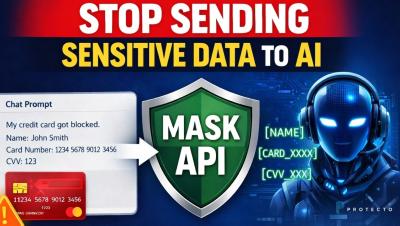
How to Protect Sensitive Data from LLMs | AI Data Privacy Demo

AI tools like ChatGPT, Gemini and other LLMs are powerful — but what happens when sensitive data gets sent to them? In this video, we demonstrate how Protecto AI prevents sensitive information from reaching LLMs using Masking APIs and Unmasking APIs. You’ll see a real workflow where user prompts containing credit card details and personal data are automatically masked before being processed by an AI model like Gemini 2.5 Flash.

WhatsApp Is the Latest Example Of Why Every New AI Feature Outpaces Legacy DLP

Every new AI feature that ships into a platform your employees already use is a security question your stack probably can't answer yet. It sounds like hyperbole, but it's the structural reality of how AI adoption works in 2026. A recent update to WhatsApp is a useful illustration of why.

The Next Phase of Enterprise Data Security: From Discovery to Control

Organizations today face a common challenge: sensitive data is everywhere. It lives across collaboration platforms, endpoints, databases, SaaS applications, and cloud storage systems. Employees and partners need to access and share information quickly, often across teams, organizations, and even countries. At the same time, regulatory requirements, security mandates, and privacy obligations demand stronger protection for sensitive data.

DSPM Best Practices: How to Implement Data Security Posture Management

Enterprise data environments have fundamentally outpaced the security architectures designed to protect them. Sensitive data now exists across endpoints, cloud infrastructure, SaaS platforms, and AI workflows simultaneously, often replicated in fragments that carry no labels and trigger no file-based controls.

5 Key Benefits of a Cloud Data Security Solution

Implementing cloud security policies and technologies has seen sustained growth in recent years. However, despite the widespread adoption of cloud security services, many companies have yet to fully recognize the critical importance of cloud security or still find themselves wondering: what is cloud security and why should it matter to their business? Migrating to the cloud provides organizations with the ability to move faster and more efficiently.

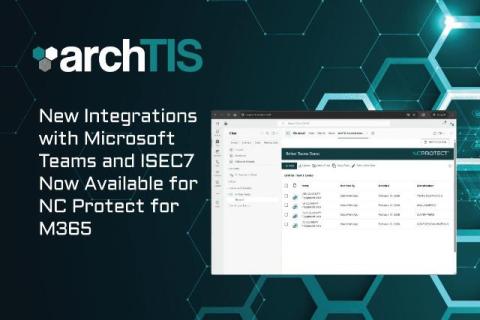
New Integrations with Microsoft Teams and ISEC7 Now Available for NC Protect for M365

As organizations increasingly rely on Microsoft Teams for internal and external collaboration, the platform’s chat and file-sharing capabilities have become central to daily operations. However, speed and flexibility come with risk. User-managed collaboration tools can create challenges in maintaining control over data access and enforcing compliance with organizational sharing and usage policies.

Data Loss Prevention (DLP): What It Is, Types, and Solutions

Most data breaches don’t happen because systems fail. They happen because people make routine errors. Attackers know this, which is why social engineering has become the dominant attack vector, exploiting everyday actions like emailing files or responding to messages. Today, 70–90% of successful cyber attacks involve social engineering, resulting in data exposure that technical safeguards can’t intercept.

Best Data Masking Tools to Know in 2026

Most companies now realize that their data is their greatest asset. Yet it can also become their greatest liability. In 2026, sensitive data rarely sits in one secure database. It moves across cloud platforms, testing environments, analytics stacks, DevOps pipelines, and AI apps. Every handoff increases exposure risk.

100 SaaS Apps. One Query. Zero Alerts: How Glean and Claude Cowork Expose the Agentic AI Data Risk

A sales rep opened Glean—an AI-powered enterprise search platform that connects to your company's SaaS apps and lets anyone query across all of them in natural language—typed "Who are my top 10 customers?" and got a clean, formatted list pulled from Salesforce, cross-referenced with HubSpot, and confirmed against data sitting in Google Drive. They copy-pasted that list into a personal Gmail draft. No alerts fired. No policies triggered. No one noticed. This isn't a hypothetical.

AI Can Scan Your Code. It Can't Secure Your Organization.

When Anthropic announced Claude Code Security on February 20th—a tool that scans codebases for vulnerabilities and suggests patches for human review—the reaction from markets was swift and brutal. Major cybersecurity names watched their stock prices fall by double digits within days. The implied thesis behind the selling: AI can now do what these companies do, so why pay for them? It's a compelling fear and an inaccurate conclusion at the same time. The DLP space is a clear example of why.