Security | Threat Detection | Cyberattacks | DevSecOps | Compliance

Is Your Privacy Safe? Why Internet Privacy Services Are a Must-Have

Protecting your online privacy is essential for securing personal information and maintaining control over your digital life. With rising cyber threats like identity theft, data breaches, and surveillance, safeguarding your privacy has never been more critical. Although privacy laws like GDPR and CCPA are making strides, individuals must actively manage their online presence. Understanding internet privacy services and their capabilities empowers you to protect your data, enhance online security, and improve your cyber hygiene.

What We Looked for in a DSPM Solution

In this episode of Into the Breach, James Purvis speaks with Fabiano, VP of Engineering, about Rubrik’s acquisition of Laminar's Data Security Posture Management (DSPM) platform. They discuss the rigorous evaluation process of a dozen startups, what made this platform stand out, and how the acquisition has enabled Rubrik to offer the most comprehensive DSPM solution in the market. From alignment in mission to overcoming challenges, Fabiano shares insights into the integration process and the future of data security posture management.

Benefits of Partnering with a Specialized Education App Development Company

A partnership with a specialized education app development company will be a godsend. The niche expertise of Celadonsoft helps the company develop tailor-made solutions to meet unique educational needs. By focusing on the education sector alone, they understand the intricacies of learning environments and, enabling them to develop apps that improve engagement and retention by up to 40%. Their team is made up of former educators and tech innovators who dive deep into pedagogical trends to make sure apps are not just functional but transformative.

Securing Sensitive Data in Healthcare: Why Privacy and Protection Must Be a Top Priority

Protegrity specializes in protecting sensitive data, a focus we’ve maintained for around 20 years. Our customer base includes many large enterprises, particularly in the healthcare and financial sectors, spanning across the globe. Our clients include some of the most renowned companies worldwide.

Understanding the Proposed FAR CUI Rule

DoD, GSA, and NASA recently published a proposed amendment to the Federal Acquisition Regulation (FAR): Controlled Unclassified Information (FAR Case 2017-016) or ‘FAR CUI Rule’. It presents critical updates on managing Controlled Unclassified Information (CUI) in federal contracts, aiming to create a uniform approach across government agencies for handling and protecting sensitive information while addressing gaps in current policies.

How Protecto Safeguards Sensitive Data in AI Applications

Discover how to build secure, compliant, and privacy-preserving AI applications with Protecto. In this video, we explain how Protecto's simple APIs protect sensitive data, ensuring compliance with regulations like HIPAA. Learn how a healthcare company used Protecto to create an AI-based fraud detection application while safeguarding millions of patient health insurance claims. Protecto's API masks sensitive information, preserving context and meaning without exposing personal identifiers like names or social security numbers.

Here's What We Can Learn from the Cyberhaven Incident

In December 2024, Cyberhaven fell victim to a sophisticated cyberattack that exploited a phishing campaign targeting its Chrome Web Store account. This breach compromised over 400,000 users by injecting malicious code into its browser extension, exfiltrating sensitive data such as cookies and session tokens. The incident has drawn significant attention due to Cyberhaven's role as a cybersecurity provider and the broader implications for browser extension security.

How to Lock Your Social Security Number Safely

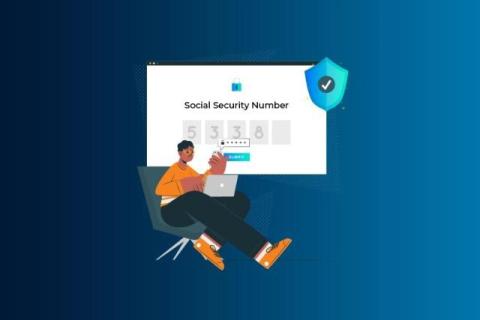
Identity thieves will do anything to get your Social Security Number (SSN). It's a very important piece of personal information. Locking your SSN is a proactive way to protect your name and money from fraud. The Federal Trade Commission (FTC) says that over 1.4 million Americans were victims of identity theft in 2022. Many of these crimes involved stolen Social Security numbers. To lower these risks, you need to learn how to safely lock your Social Security Number.

De-identification of PHI (Protected Health Information) Under HIPAA Privacy

Protected Health Information (PHI) contains sensitive patient details, including names, medical records, and contact information. De-identification of PHI is a critical process that enables organizations to use this data responsibly without compromising patient confidentiality. The Health Insurance Portability and Accountability Act (HIPAA) establishes strict rules to ensure the privacy and security of PHI, making de-identification essential for compliance.

A 12-step cyber resilience plan for business: Integrate defense and recovery to minimize downtime and data loss

Cyberattackers are using AI to increase the frequency and effectiveness of ransomware attacks and other threats. The number of email attacks has increased by almost 300% in the last year, and a single data breach can cost millions of dollars to resolve and bring your business to a sudden halt. You need a cyber resilience plan that will enable you to both ward off attacks and be able to recover from one with minimal damage. This white paper offers a 12-step plan that businesses can use to protect themselves.

Data Security's Low Hanging Fruit: Redundant, Obsolete, and Trivial Data

In this episode of Into the Breach, James Purvis and Drew Russell tackle the growing issue of ROT data - redundant, obsolete, and trivial data - and its impact on both security and costs. They discuss how CISOs can achieve a win-win by reducing risk and hard costs through effective data management. From cloud migration to legal implications, they explore practical strategies to identify, manage, and eliminate ROT data for a more efficient and secure organization.

The U.S. Cyber Trust Mark: A Shield for Your Smart Life

Let’s be real: your “smart” devices might be the dumbest thing in your house when it comes to your data protection and security. That baby monitor? Hackable. Your home camera? Vulnerable. Even your voice assistant could be spilling secrets you didn’t know it heard. And what about your home router, the nerve center of your connected devices? It’s often an overlooked Achilles’ heel in home security.
Featured Post

2025 Predictions - Navigating Through the Challenges and Opportunities Ahead

As we enter 2025, the global economic landscape remains a mix of challenges and potential shifts that will shape markets and industries worldwide. From high interest rates to the evolving impact of AI, there are several key factors that will define the year ahead. While there will be friction in some areas, persistence, agility and out-of-the-box thinking will ensure a competitive edge.

Data Exfiltration: What It Is, Examples, and Prevention Tips

Data security is vital to your organization’s well-being. A single data breach costs $4.88 million on average, according to IMB’s Cost of a Data Breach Report 2024. Besides financial losses, data exfiltration may damage a brand’s reputation, cause operational disruptions, and result in legal actions. Therefore, giving maximum attention to your cybersecurity measures and constantly enhancing them is a must.

Securing Healthcare Data in the Cloud: Navigating Challenges and Best Practices

Attributed to Michael Pride, Senior Sales Director – APAC, Protegrity In recent years, Australia’s healthcare sector has faced significant challenges regarding data privacy. With high-profile breaches exposing sensitive patient information, the responsibility for safeguarding this data has shifted from individuals to organisations.

The 12 Best Data Loss Prevention Software Solutions of 2025 and 50+ FAQs Answered

Data breaches cost companies an average of more than $4 million per incident—and that’s before considering the reputational fallout. Data Loss Prevention (DLP) tools have become indispensable for safeguarding sensitive data, especially as organizations embrace hybrid, remote, and cloud-first operations. Once limited to rules-based data classification, modern DLP has evolved into a powerful fusion of AI-driven classification and AI-based data lineage.