Human error is a serious cybersecurity risk, but it can be mitigated through Multi-Factor Authentication (MFA), least-privilege access, proper security training and password management.
Protecting your enterprise database from privilege abuse is important for protecting sensitive data, maintaining trust and avoiding financial losses. Watch this video to learn what privilege abuse is, its risks and how to prevent it from affecting your enterprise.
Privileged Access Management (PAM) secures privileged accounts and has several use cases. Learn how PAM strengthens an organization’s security posture and mitigates security threats by watching this short video.
KeeperPAM enables organizations to achieve complete visibility, security, control and reporting across every user on every device. KeeperPAM is cloud-based, enables zero-trust and zero-knowledge security, and helps your organization meet compliance mandates by unifying four integral solutions into one unified platform and control plane – enterprise password management, secrets management, connection management, zero-trust network access and remote browser isolation.
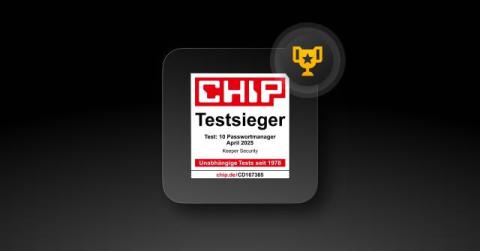
Keeper Security has once again earned the coveted title of “Test Winner” in a recent comparison of top password managers conducted by CHIP Magazine, a leading consumer technology publication in Germany. This achievement marks Keeper’s third consecutive win, following its 2023 and 2024 triumphs. In the April 2025 edition of CHIP, the magazine’s dedicated test center rigorously evaluated Keeper Password Manager alongside 10 other leading solutions.
Working with freelancers and subcontractors is essential for business growth, but it also introduces security risks. In this short video, learn the top security threats businesses face when working with freelancers and several tips you can use to secure your organization’s data.
Insider threats can pose significant security risks to organizations, but they can be mitigated with a Privileged Access Management (PAM) solution and by enforcing least-privilege access. Watch this short video to learn how to reduce the risks of insider threats in your organization.
To stop receiving most spam emails, you can report them, block spam email addresses, make a burner email account and remove third-party account access. Watch this video to learn the difference between spam and marketing emails and how to reduce the number of spam emails you receive.
Role-Based Access Control (RBAC) and Attribute-Based Access Control (ABAC) are two popular access control models, but which one is right for your organization? Let’s learn the key differences and when to use each.
Black hat hackers are a serious threat to organizations, exploiting security vulnerabilities to steal data, disrupt operations and extort money. In this video, we break down what black hat hackers are, how they operate and actionable tips to protect your organization.
You may worry about whether your passwords are strong enough, but don’t forget about your username! In this quick video, we’ll show you how to create a secure username that keeps your accounts safe from hackers.
Sandboxing is used by developers and security teams to isolate files and programs in a secure, controlled environment. In this quick video, learn what sandboxing is and how it’s used to enhance an organization’s cybersecurity.
Can you tell the difference between a weak and a strong password? In less than 90 seconds, learn how to spot a weak password and ways to create a strong, unique password instead.
Scammers are using Artificial Intelligence (AI) to clone voices and trick people into giving away money and information. Watch this short video to learn how AI voice scams work and the easy steps you can take to protect yourself.
Bring Your Own Device (BYOD) policies introduce security risks like malware infections, data theft, loss and leakage. Learn how this can occur and how your organization can mitigate these risks.
Deepfakes are videos, images and audio generated by Artificial Intelligence (AI) that look real but aren’t. Learn how to spot deepfakes to protect yourself from falling for misinformation.
Practicing good password hygiene will prevent you from becoming a victim of cyber attacks, viruses and malware infections, password breaches and more. Learn about the best password hygiene tips for protecting your online accounts.
Oversharing on social media can make you a target for hackers and scammers. Watch this quick video to learn how to protect your privacy by limiting what you share, monitoring who follows you and adjusting your privacy settings.
The four types of Multi-Factor Authentication (MFA) are knowledge, possession, inherence and location. These authentication types give users numerous options for securing their data, ranging from hardware security tokens to biometric scans. Learn more about each type of MFA method to help you choose which one will best protect data for you or your business.

You can protect your digital footprint by deleting any accounts you no longer use, adjusting your privacy settings, avoiding oversharing on social media and using a password manager. Your digital footprint is an online reflection of who you are. Every action you take online, from the websites you visit to the posts you share, contributes to this footprint. Continue reading to learn how you can protect your digital footprint and maintain a clean online presence.
Some of the most common mistakes in secrets management include hardcoding secrets, failing to rotate them, over-provisioning access, lacking centralized management and neglecting the lifecycle of secrets. Organizations become vulnerable to data breaches when these mistakes are not properly addressed. This is where secrets management becomes crucial. Secrets management involves organizing, managing and securing IT infrastructure secrets such as passwords, API keys and database credentials.
Implicit trust and explicit trust both play important roles in access management, but they have distinct differences. Learn how they differ and how KeeperPAM can support explicit trust and zero-trust security.
When managing complex IT environments, many organizations wonder: Is one Privileged Access Management (PAM) solution enough? In this video, we break down why using multiple PAM tools can actually do more harm than good. From increased complexity and integration issues to higher costs and potential security gaps, we’ll explain why consolidating your PAM strategy is the smarter choice. Learn how a unified PAM platform like KeeperPAM helps simplify privileged access management while improving security and reducing overhead.
When it comes to password managers, there are a few common misconceptions, such as them being too risky to trust, vendors being unable to handle outages, the risk of device-side attacks and them being considered a single point of failure. High-profile security incidents have brought into question the security of using password managers; however, cybersecurity experts, organizations and government agencies continue to recommend them as a best practice.
Privileged accounts provide access to an organization’s most sensitive data and systems. The top challenges in managing privileged accounts include a lack of visibility, inconsistent access control policies, weak password management practices and inadequate incident response plans. Continue reading to learn seven common challenges organizations face when managing privileged accounts, and how to overcome these challenges with the help of a Privileged Access Management (PAM) solution.
Bait-and-switch is a practice in which a vendor lures in a buyer with a tempting offer for a great product that the vendor does not intend to sell. Learn more about how bait-and-switch scams work.
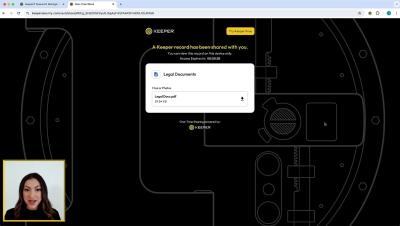
One of the core use cases of the Keeper platform is the capability to encrypt and protect confidential documents, photos and videos with end-to-end encryption. Files that are stored in the Keeper Vault are encrypted with zero knowledge AES 256 encryption, which means only the user has the ability to access their stored files. These files can also be shared with others, which are end-to-end encrypted from vault to vault using Elliptic Curve cryptography.
Securely managing database access for remote users is essential for protecting against unauthorized access and insider threats harming your organization. Learn about best practices organizations should be following.
Credential theft is a major cybersecurity risk to organizations, but by encouraging employees to use passkeys and password managers, and by providing regular cybersecurity training, organizations can significantly reduce this risk.
Keeper Password Manager was rated as a leading enterprise, mid-market and small business password manager for Spring 2025 by users on G2, the world’s largest and most trusted software marketplace. Within the Spring 2025 report cycle, Keeper earned a G2 Milestone Badge, surpassing 1,000 reviews from a variety of customers, including Small Business, Mid-Market and Enterprise end users and admins alike.
SIM swapping is a dangerous scam that can give cybercriminals access to your phone, accounts and personal data. In this video, we explain how SIM swapping works and the simple steps you can take to stay protected.
Phishing emails use social engineering tactics to steal your personal information, but you can stop them in their tracks. In under 90 seconds, learn how to spot the red flags of phishing emails, including urgent language, suspicious email addresses and unsolicited links.
Privileged Access Management (PAM) secures access to privileged accounts to minimize security risks and ensure compliance. In this short video, learn how PAM strengthens organizations’ security and protects sensitive data.
In rare cases, you can get a virus by visiting a website. This is possible through exploit kits and drive-by downloads. Learn more about how you can get viruses from visiting a website and what to do if you ever get infected.
Manufacturing organizations need Privileged Access Management (PAM) for Industrial Internet of Things (IIoT) security because it protects critical systems and devices by ensuring that only authorized users have access. IIoT refers to a network of connected devices that work together to collect and analyze data across industrial sectors to improve operational efficiency. As IIoT becomes increasingly integral to manufacturing, securing these connected systems is more important than ever.