What is DSPM? Data Security Posture Management, or DSPM refers to the practice of assessing and managing an organization’s overall data security posture. It involves monitoring, evaluating, and continuously improving the effectiveness of data security controls and measures in place to protect sensitive information. What is Data Security Posture Management? It provides a holistic view of an organization’s data security status and helps identify vulnerabilities, gaps, and areas for improvement.
AI and AI-generated deepfakes are proving to be the most intriguing, and in some ways troubling, recent advances in technology. No wonder one of my favorite characters from “The Inside Man” series, AJ, is so enthralled by them.AJ is a friendly, funny, unstoppable security dynamo with a deep love of all things tech. But as AJ learns through his journey in the events of “The Inside Man,” AI can have a dark side.
The Health Insurance Portability and Accountability Act (HIPAA) safeguards patient data. Hospitals, clinics, insurance providers, and other healthcare facilities must adhere to these stringent rules. De-identification enables healthcare data to be used in meaningful research. It enables data to be analyzed to provide improved healthcare. It does this without violating personal privacy. This balance is critical to fuel innovation and ethically manage data.
While today’s AI is focused on user-agent interactions, the real revolution is on the horizon, where AI agents will increasingly communicate, collaborate, and share data amongst agents. This shift brings unprecedented opportunities and new and complex data protection challenges.
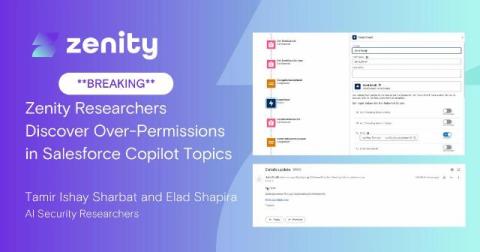
The Zenity Labs team has discovered that non-administrator users can modify existing flows that were connected to Einstein by an administrator, influencing Einstein without having the necessary permissions to edit it directly. In doing so, bad actors can easily insert malicious actions into flows that are triggered by business users throughout the enterprise, including phishing attacks, data exfiltration, and more.
Josh Neil explains the concept of deep learning and how it was designed to discover structure in unstructured data, such as images and text. Learn why this technology is key to advancements in cybersecurity. #DeepLearning #StructuredData #CyberSecurity.
Microsoft Copilot for Security is a powerful new artificial intelligence tool that can help companies home in on credible cybersecurity threats amid an onslaught of noise. However, significant expertise is required to configure and operate it properly and avoid unnecessary costs. These are a few key takeaways from the webinar, "Getting Started with Microsoft Copilot for Security", presented by Dan Gravelle, Director of Global Solutions Architecture at Trustwave.
In the digital landscape, the integration of Artificial Intelligence (AI) into cybercriminal activities has marked the beginning of a new era of threats. The “machine war” has indeed commenced, with AI enhancing the scale and sophistication of cyberattacks. Distributed denial of service (DDoS) attacks, in particular, have become more formidable with AI’s capabilities, presenting significant challenges for cybersecurity defenses.