On February 12, 2025, Palo Alto Networks announced CVE-2025-0108, a high severity (8.8) authentication bypass vulnerability affecting Palo Alto Networks PAN-OS management web interface. Successful exploitation of this vulnerability allows unauthenticated attackers with network access to invoke certain PHP scripts without proper authentication. While it does not lead to remote code execution, it impacts the confidentiality and integrity of the affected system.
Recently, Palo Alto Networks disclosed CVE‑2025‑0108—a high-severity authentication bypass in the PAN‑OS management web interface. Although the flaw does not enable remote code execution, it compromises the confidentiality and integrity of management functions. In this post, we’ll break down the technical details, discuss the exploitation methodology, illustrate configuration and code examples, and outline effective mitigation strategies.
Industrial control systems (ICS) and SCADA (Supervisory Control and Data Acquisition) environments were never designed to be exposed to the internet. Yet, as manufacturing enterprises embrace digital transformation, they find themselves in a challenging position—balancing operational efficiency with cybersecurity risk.
In the world of cybersecurity, nothing stays still for long. The endless proliferation of new technologies and rapidly shifting threat landscapes forces organizations to continually reevaluate their approach to risk. Over the last two decades, security teams have leaned heavily on vulnerability management (VM) solutions to identify, classify, and patch software vulnerabilities on internal assets.
As enterprises continue to adopt hybrid and multi-cloud environments, the complexity of managing network security has increased significantly. Attack Surface Management (ASM) has emerged as a critical capability for identifying, monitoring, and mitigating risks across these dynamic environments. Forward Networks’ innovative digital twin technology delivers a compelling solution that addresses the challenges of effective ASM practices.
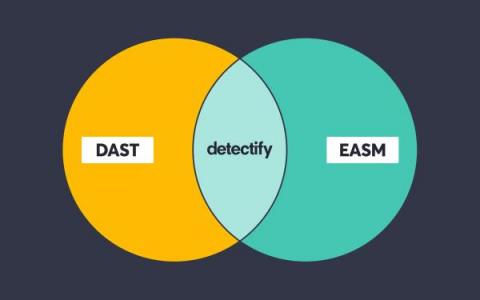
Below, we’ll take a look at how both DAST as a methodology and DAST as a tool relate to what we do at Detectify. More specifically, we’ll explain how Detectify’s solution applies DAST methodology to the full breadth of an attack surface, automating the heck out of application security testing. With these methods, we cover millions of domains before you’ve even had breakfast.
On January 14, 2025, Fortinet disclosed a new critical (CVSS 9.6) authentication bypass vulnerability affecting FortiOS and FortiProxy. This vulnerability, CVE-2024-55591, allows unauthenticated remote attackers to target the Node.js WebSocket module of the administrative interface and potentially gain super-admin privileges.
We’ve asked Outpost24’s CISO, Martin Jartelius, what 2025 is likely to hold for organizations using attack surface management (ASM) tools. Here’s what Martin had to say about what he predicts for ASM in 2025, as well as some thought on how the CISOs role might change.
On Wednesday, January 8th, Ivanti disclosed two severe vulnerabilities affecting Ivanti Connect Secure VPN devices. Ivanti Connect Secure is an external-facing SSL VPN used to secure remote access to corporate networks. Ivanti Policy Secure is an internal network-access control solution designed for regulating access within an enterprise’s network. The critical vulnerability (CVSS 9.0) CVE-2025-0282 allows unauthenticated remote code execution (RCE) through a stack-based buffer overflow.