Security | Threat Detection | Cyberattacks | DevSecOps | Compliance

Risk-based vulnerability management explained

Risk-based vulnerability management (RBVM) is a cybersecurity methodology that prioritizes vulnerabilities based on actual business risk rather than technical severity scores in isolation. RBVM combines vulnerability severity, exploitation likelihood, threat intelligence, and asset criticality to focus remediation on the exposures most likely to be weaponized against your specific environment.

Is platform engineering just DevOps with a new name, or is something operationally different happening?

Platform engineering is the practice of building and maintaining a centralized internal developer platform (IDP), a curated set of tools, workflows, and self-service capabilities that application teams consume rather than configure on their own. It's a structural response to how DevOps practices evolve at scale, particularly when "you build it, you run it" introduces more cognitive load than individual development teams can sustainably manage.

Tanium Atlas: Tech Talks Episode #163

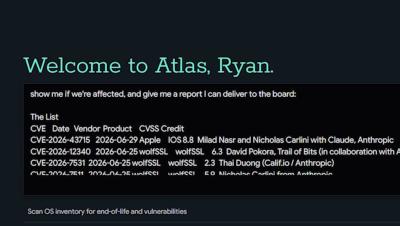
Meet Tanium Atlas: the AI-first experience that turns a natural language prompt into real endpoint action — no query syntax or module-hopping needed. One interface, powered by the Tanium platform. Let's go!! We're walking through Tanium Atlas—the new AI-driven interface that replaces fixed-module consoles with dynamic, natural language-powered pages. In this episode, you’ll learn: Whether you're an IT admin managing 100,000+ endpoints or a security operator racing to respond to the next CVE, Atlas helps you move faster - with confidence.

Automated vulnerability remediation: A governance, validation, and rollout guide for enterprise teams

Automated vulnerability remediation uses policy-driven workflows to execute approved remediation actions, including patch deployment, software updates, and configuration changes, consistently across managed assets. Within a broader vulnerability management program, it helps teams close the gap between identifying an exposure and safely resolving it at scale.