Security | Threat Detection | Cyberattacks | DevSecOps | Compliance

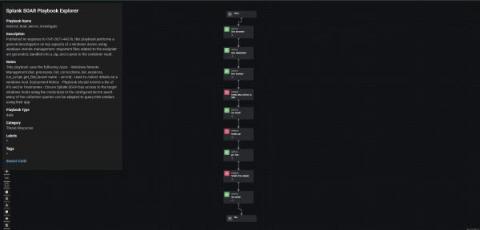
Splunk SOAR Playbook of the Month: Investigations with Playbooks

It comes as no surprise that analysts spend a lot of their time investigating and responding to a continuous flood of incidents on a daily basis. While the sheer volume of alerts alone make for a time consuming endeavor, trying to manually tackle so many of these alerts results in slow incident response and can trap your team into a series of reactive security operations.


What Is Financial Crime Risk Management (FCRM)?

Financial crime risk management (FCRM) is the practice of proactively looking for financial crime, including investigating and analyzing suspicious activity, rooting out vulnerabilities and taking steps to lower an organization’s risk of becoming a victim. For organizations in every industry across the globe, an effective FCRM strategy has never been more important.

Coffee Talk with SURGe: The Interview Series featuring Jake Williams

Join Audra Streetman and special guest Jake Williams (@MalwareJake) for a discussion about hiring in cybersecurity, interview advice, the challenges associated with vulnerability prioritization, Microsoft's Storm-0558 report, and Jake's take on the future of AI and LLMs in cybersecurity.

What's ABAC? How Attribute Based Access Control Works

Multi-cloud environments are getting plenty of buzz in recent years. It’s no wonder, really, that increased flexibility, risk mitigation, performance optimization and compliance adherence associated with the practice have drawn in new muli-cloud evangelists across the industry. For all the great benefits multi-cloud offers, it does present one significant challenge: how do you ensure a single point of control while establishing consistent security policies for all users?

Cryptographically Relevant Quantum Computers (CRQCs) & The Quantum Threat in 2023

What is the quantum threat, and is it real? The boy who cried (quantum) wolf: being honest about the threat and what it means for you A cryptographically-relevant quantum computer (CRQC) is a quantum computer that can run algorithms to crack or weaken existing (so-called “classical”) cryptography. Today, I’ll explain when — or if — this CRQC is likely to exist, what the real threat is, and how it might affect your data and assets.

IoT Monitoring: Protecting & Maintaining IoT Devices in 2023

The state of cybersecurity is in constant flux — meaning we must constantly iterate and revisit our systems to protect ourselves. With security logging and monitoring failures moving up to number 9 of the OWASP Top 10, organizations everywhere are revisiting their stance on network and application monitoring. This is great for getting a pulse check on security posture and is certainly key in any good strategy, but we might be forgetting something — IoT devices.

Open Cybersecurity Schema Framework (OCSF) Takes Flight with v1.0 Schema Release

It is not very often that we see cybersecurity vendors put aside competitive differences and ambitions to work towards a common goal that benefits the entire cybersecurity community. The Open Cybersecurity Schema Framework (OCSF) has shown to be an example of a productive industry-wide collaboration to facilitate a more secure environment for businesses, governments and individuals all over the globe.

Coffee Talk with SURGe: 2023-AUG-08 Black Hat, Defcon, Tenable CEO, Zoom TOS, Acoustic Attacks

Join Ryan Kovar, Shannon Davis, and Audra Streetman for a special edition of Coffee Talk, live from Black Hat in Las Vegas! The team of Splunk security experts will recap some of the latest security news, including: Ryan and Audra also competed in a charity challenge about the risk of being hacked while at a hacking conference.

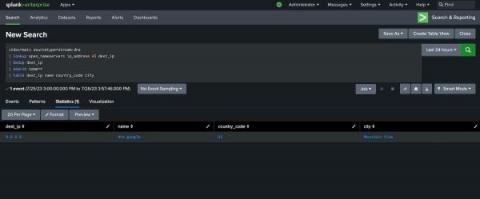
Using the Lookup Command for Threat Hunting (Lookup Before You Go-Go)

A wise person once said that you should use the lookup command before you go threat hunting. Or, as I hear it in my head, “Look it up before you go-go…hunting”, a la WHAM!:   In this must-read tutorial for hunting in Splunk, we’re looking at the lookup command, including what it does and how and where to use it for threat hunting. Let’s get started! (This article is part of our Threat Hunting with Splunk series. We’ve updated it recently to maximize your value.)