Security | Threat Detection | Cyberattacks | DevSecOps | Compliance

Using AI in Security Operations: A Practical Checklist for the Modern SOC

AI is transforming how security operations centers (SOCs) work, but the hype can outpace the reality. You don’t need to build custom models or deploy cutting-edge platforms to benefit. Chances are, you already have AI-powered capabilities in your SIEM, SOAR, or security data platforms. The question is: Are they doing anything useful? This practical playbook lays out six key priorities to increase productivity and effectiveness while maintaining control.

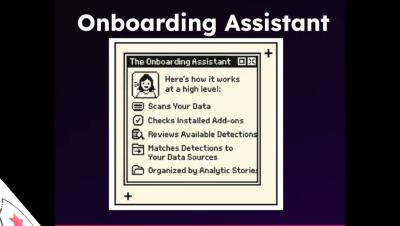
How to Operationalize Enterprise Security Content Update (ESCU) Content

The Splunk Enterprise Security Content Update (ESCU) app is a powerful resource developed by the Splunk Threat Research Team. It provides out-of-the-box detection analytics mapped to the MITRE ATT&CK framework and tailored to various platforms such as Windows, Linux, and cloud environments. While installing ESCU is straightforward, operationalizing the content - meaning tuning, enabling, and maintaining it for real-world use - requires a few deliberate steps.

Detecting Suspicious ESXi Activity Before Ransomware Happens

Cybersecurity teams worldwide have been fighting against ransomware attacks on ESXi infrastructure for years. ESXi is a lightweight, bare-metal hypervisor developed by VMware that allows multiple virtual machines to run on a single physical server. ESXi is widely used in enterprise environments, often hosting virtual machines that support essential services for an entire organization.

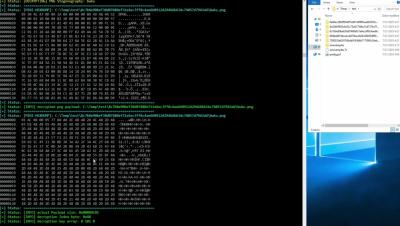
Picture Paints a Thousand Codes: Dissecting Image-Based Steganography in a .NET (Quasar) RAT Loader

Steganography is the art of hiding information inside a seemingly ordinary, legitimate object so that no one suspects anything is hidden. The technique T1027.003 has been around for a long time and is increasingly used by malware authors and threat actors to avoid detection. This involves hiding malicious payloads inside innocent-looking files such as images, audio, or documents. By embedding malware in these files, attackers can bypass traditional security tools that scan for obvious threats.

Mission Control for Modern Risk

Financial institutions face a harsh reality. As cyberattacks have become more sophisticated and move with greater velocity, a single incident can ripple across IT systems, payment networks, and customer accounts long before the organization can respond. The problem? Most security, fraud, IT operations, and risk teams still operate in silos. Each team monitors their own consoles, works from its own data, and follows its own playbooks.

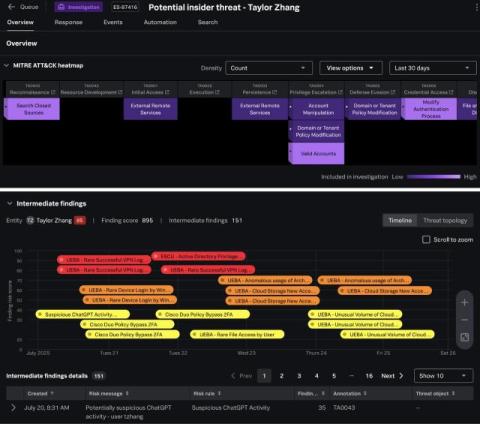
Obey My Logs! AI-Powered Compromised Credential Detection

What if I told you that compromised credentials still remain the number one avenue of initial access in all cyber security breaches? It’s no exaggeration — according to the Cisco Talos IR Trends report for Q1 2025, over half of all incidents reported involved the use of valid credentials. The 2025 Verizon Data Breach Investigations Report claims credential abuse accounted for 22% of all confirmed breaches.

From Bots to Autonomous Agents: How State Leaders Can Prepare for the Next Wave of AI Threats

Imagine a tireless, ever-learning army that never sleeps and never makes mistakes—an army of AI agents, not humans. What began as simple bots has evolved into sophisticated, autonomous entities operating in perfect sync at machine speed. This is no longer science fiction: autonomous AI is accelerating fraud, turning slow, manual crimes into rapid, relentless attacks. Agentic AI fraud isn’t coming—it’s here. Most organizations remain unprepared.